Monday, December 12, 2011

As the Regime Changes: Caucus Edition

In the final days before Democrats in Burlington chose a candidate for mayor, a debate erupted over skate park funding. But even hotter topics are ahead. Here is a preview of things to come in the People’s Republic: VTDigger.org: Mayor’s race turns to trust and skate park funding Also, the outcome of the dueling Democratic and Progressives caucuses: Weinberger wins...Progressives Delay...
  
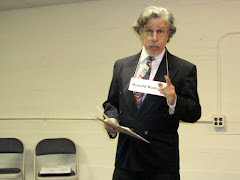
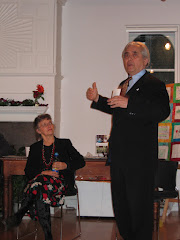
Listening parties: from left, Progressive Mayor Bob Kiss, Republican candidate 
Kurt Wright, possible Independent candidate Karen Paul, and Democrats 
Norm Blais, David Berezniak, and Joan Shannon.

Yes, it was down to the wire. Who would win the Democratic caucus – Progressive turned Democratic Senator Tim Ashe or Airport Commissioner and housing developer Miro Weinberger? Would the Progressives field a candidate if Ashe didn’t win? Had Republican Kurt Wright already previewed his campaign strategy? And what was with that recent City Council vote to reconsider skate park funding? So many questions, and even more to come.

Here’s another: should non-citizens in Burlington get the right to vote? That’s coming up soon on Vermont’s leading political soap opera: As the Regime Changes.
.
Shortly after my latest article was filed, former Gov. Howard Dean endorsed Weinberger for mayor. A few days later the housing developer defeated State Senator Tim Ashe at the conclusion of the Democratic caucus. But even more interesting, Republican leaders announced that State Auditor Randy Brock will be their unity candidate for Vermont governor next year against incumbent Peter Shumlin. During his announcement speech, Brock offers a red meat attack rich in subtext:
.
"If my travels around this state have taught me anything, it is this: Vermonters don’t want to live in a 'laboratory for change.' They don’t want to be the guinea pigs or lab rats in a grand social experiment."
.
Wow! Human guinea pigs trapped in a laboratory for change. Now that's a reality TV concept. If this is the starting point, the campaign should be interesting.

A few days later, during a press conference with Bernie Sanders in Burlington on the launch of a new multi-million research center, the governor responded -- in a way -- by embracing the idea that, on energy and more, being a laboratory for change is precisely the idea.
^^^
Masters of the (Smart) Grid: GMP Chief Powell, Gov. Shumlin, Sen. Sanders, and
Sandia VP Rick Stulen announce a Sandia-led Vermont lab. (12/12/11)

Tuesday, December 6, 2011

Hunting Finance Vultures: A Talk with Greg Palast

“The vultures get their hands on money that they claim is owed by the poorest nations, usually during a civil war. Then they find loopholes and seize all the wealth.” – Greg Palast 

Palast and hat.
By Greg Guma   In his new book, Vultures' Picnic, Greg Palast pulls together documents and stories from more than three decades of detective work, unraveling the schemes of the Energy-Finance Combine and exposing several real life vulture capitalists. On Dec. 12, he will visit Burlington and share some of what he has found out at Main Street Landing during a 7 p.m. talk sponsored by Toward Freedom.

We talked on December 4, covering BP's crimes in the Gulf and Caspian Sea, Entergy's exploitation of hurricane Katrina, what it's like to interview a corporate predator, making the transition from investigator to journalist, and why Uber-Vulture Paul Singer wants him off British TV. Here are some excerpts. Also check out my feature about Palast and the vultures for VTDigger.org -- In fedora and trench coat, Palast exposes "vultures" who profit from crisis.  Below this interview you'll find recent radio coverage by Free Speech Radio News.
* * *
Guma: By the time I got to Page 348 in Vultures' Picnic, when you’re talking about Joe Stiglitz and the IMF riots, I had to wonder whether the current uprisings are part of the plan. You know, decriminalizing banking, privatization and the assumption that austerity will lead to unrest and a crackdown…

Palast: No doubt about it. Same smell, same scene. But Joe Stiglitz (economist and former member of the Clinton cabinet) doesn’t give me the information. It’s very important to him that he doesn’t violate his agreements.

Guma: Why did you use a reportage verite style for this book?

Palast: Because this is how I do it. Since The Best Democracy Money Can Buy, people are used to it. And people know about me from reporting on the presidential voting scandal. There I gave you the information that I cover. I thought it was important to say how I’m getting it - and sometimes failing to get it. I didn’t want to keep doing the same thing. Another reason is that I wanted to make the point that I’m an ordinary guy in extraordinary circumstances. People should know my story.

Guma: If the British government is an arm of BP’s imperial power, what is BP an arm of?

Palast: Actually, BP is an arm of Morgan Stanley. It used to be that BP was an extension of military intelligence, now the roles are reversed.

Guma: There’s so much to say about BP. Starting with homicide…

Palast: Exactly. The information we got from an eyewitness right after the blow out was that this was not the first time. And it was the same reason, cheap crap cement. And they covered it up by beatings and bribery and blow jobs. Vulture Picnic is saying that they covered this up – and by doing that 11 guys died. I’m saying, as a former racketeering and fraud investigator, that it was a crime.

There’s a lock up between Big Oil, Big Finance and Big Government. All the oil companies knew about the problem prior to the blow out, and the Department of State may have hidden it from Congress.

We tracked them to Azerbaijan and got arrested in the desert, but Badpenny gave me a camera pen so I got the documents out. When I work for BBC and The Guardian, I’m under British law. I have to give this evidence to BP and ask them whether it’s right. And they have never denied it. Did you have another blow out? No denial, just blah blah blah.

There were three crimes. Crime number one: PB destroyed the Caspian Sea and the Gulf. The Gulf of Mexico is a crime scene. Crime number two: The government knew and covered it up. And crime number three: The US press is ignoring it, except maybe a public whipping, maybe.

The New York Times is a local paper that does gossip. And NPR has become the National Petroluem Network. In Britain I’m mainstream, I work for the BBC and The Guardian. So, they can’t tell us that didn’t know this.

Guma: You say that one of the lessons for BP was, “Don’t prevent, don’t pay.” Which brings us to the vultures. Who are they?

Palast: You can get a lot of the details in 1st chapter, which you can download free.

First, there really is a Goldfinger, and compared to him the movie villain was a girl scout. The vultures get their hands on money that they claim is owed by the poorest nations, usually during a civil war. Then they find loopholes and seize all the wealth.

The number one US vulture is Paul Singer, an advisor to Romney. His office recently called the BBC in London to say they have a file on Palast. They really want to smear me and implied that a lawsuit was coming. Paul Singer is the number one donor to the Republican Party. So, they are not minor players. He makes his money by literally killing babies, according to the former Deputy Secretary of the UN. And what Singer wants is Palast off the air. He sent a complaint to The Guardian.

His buddy – they literally have a club – is Goldfinger, who bribed the President of Zambia with $3 million. In return he let Goldfinger collect a phony debt and take $45 million off the Zambian treasury – the money we gave them to fight AIDs. This is also a crime.

We tracked the trail of the president. His bank was in Geneva and Badpenny followed the trail, pulling off the role of a TV star. She says, “We’re from a reality show, Shopping with the Rich and Famous.”

Since we put this on the air the laws have changed in several nations. Now they bar these vulture speculators. But this was a case of bribery. The door is closed, but not in America.

Guma: When you get into the room with someone like that, or the generalissimo of globalization, is anyone really there?

Palast: I find that the government guys are just careerists. But the actual vultures are brilliant and frightening, and most are fairly charming. And they know their shit. The oil guys are actually quite brilliant. You really have to know your stuff, and not get charmed. Think back: How many news guys licked the loafers of Ken Lay?

Because they know me – and I have a degree in international finance – they have a tough time saying I don’t understand. Actually, they run from me in some of these stake outs.
^^
^^
Guma: Let’s talk about nuclear power. Vermont Yankee may close next March…

Palast: The operative word is “may.”

Guma: …and Entergy is suing. What can you add to the discussion for Vermonters?

Palast: There’s no effective earthquake proofing. Remember we’re talking about a seismic event, for instance the kids from Al Qaeda. If things screw up you have only one thing between you and disaster—those diesel generators. But we know that they might as well as put Hanukah bushes around the plant.

There is no way those generators can fire up – actually maybe a 50 percent chance. In nuclear power, the problem is always something cheap. There are three things involved in every plant: cement, steel and fraud. The companies just change their names.

Entergy had enough brains to get Hillary [Clinton], a smart move. When I investigated them for the City of New Orleans I went through their books and found a corrupt cesspool. The NRC calls the standard “management integrity.” They don’t have it.

They were the power company for New Orleans. Parts of the city were dark for more than a year after the hurricane. There are places that still don’t have electricity. They said that unless rates went up the lights wouldn’t be turned on. The city went down and they took the power for the plant and sold it for profit. As a result Entergy made a fortune off Katrina. They could sell power at a premium elsewhere. They took the gain and pocketed it.

When they run scams like that, don’t trust them. If they’re lying about the money they’re lying about everything.

Guma: After years investigating corporate crimes was making the change to investigative journalist empowering?

Palast: It was necessary. What was the point of doing this, I thought, when I had to dump stuff in a file and seal it. I was going insane, not being able to make this public. Going public is vital to me. In London I am on the front page, and all over Europe and Africa. Here I can barely get on the radio. But at least I can shout from across the water, as opposed to not being able to say anything because it’s under seal.

Guma: So, the vultures eat the carcasses – whole countries sometimes – but the real killing is made by Switzerland, Norway, US and Britain – the so-called donor nations. And the ultimate winners are the energy-finance combine. Is this an institutional or structural problem, or mainly the actions of the vultures and others in the 1%?

Palast: I hate the bad apply model. That’s why I hated the Enron story. I wrote about it as an example. The whole tree is rotten to the roots; that is the key. And the so-called investigative journalists are the biggest part of the cover up because they find a bad guy for you to pick on. This justifies the status quo.

Guma: Despite all that, aren’t you more optimistic with the rise of Lula, Chavez, and Morales in Latin America, and the overall mood at the moment?

Palast: Sure. The problem is religious, and this is a religious book. These are matter of faith and personal courage. That’s the story I’m telling. It’s about whether we have the courage not to be slaves, toadies and greedsters.

Friday, December 2, 2011

Vermont Pols Push to End Corporate Personhood

As support builds to overturn the Supreme Court’s Citizens United decision, organizer David Cobb returned to Vermont last week to discuss pending state legislation and Town Meeting votes aimed at amending the US constitution. From VTDigger.org

Over the last decade more than a hundred cities and towns across the country have passed ordinances putting citizens' rights ahead of corporate interests. They have banned businesses from dumping toxic sludge, building factory farms, mining, and extracting water for bottling.

Some have also refused to recognize corporations as people.

On Jan. 21, 2010, however, the US Supreme Court firmly rejected that idea in the Citizens United v. Federal Election Commission case, ruling that corporations are “persons” with First Amendment rights and cannot be prevented from spending unlimited funds on political campaigns.

Vermont State Legislature
David Cobb is determined to change that, and returned to Vermont this week to promote the next steps in a campaign to amend the US constitution. Last January, Cobb, a former Green Party candidate for president who leads the Move to Amend campaign, spoke about the issue in Burlington, Waitsfield and Montpelier during a tour of the state organized by the Women's International league for Peace and Freedom. He also met with 11 state senators who agreed to support a Vermont resolution calling on Congress to initiate the process.

In a joint interview with Cobb on Vermont Public Radio, Ben Cohen explained this week that he originally felt amending the constitution “was an incredibly high bar. But when the Occupy Wall Street movement came around, I thought this makes it possible.”

On Tuesday evening Cobb took part in a Montpelier panel discussion with Jennifer Taub, a Vermont Law School associate professor, as well as Cohen and Jerry Greenfield, co-founders of Ben & Jerry’s Homemade.  Since the Occupy protests, public attention has turned to economic inequality, corporate power and restricting the use of money in political campaigns.

In Vermont several organizations have picked up the call, including the Vermont Public Interest Research Group and Clean Yield Asset Management, which co-sponsored the Montpelier event to “kick-start a statewide conversation.” Sen. Bernie Sanders is leading the charge nationally, VPIRG’s Paul Burns calls the issue “one more opportunity for our small state to take the lead,” and activist groups, in Vermont and elsewhere, have held house parties to plan for a “day of action” on Jan. 21, the second anniversary of the Supreme Court decision.

The day before that, a Friday, Move to Amend will help to organize rallies at more than a third of the country’s federal courts, including the Supreme Court, in many cases while they are in session.  Some participants will commit civil disobedience by blocking courthouse steps, Cobb predicts. 


UPCOMING: Investigative journalist Greg Palast, author of Vultures' Picnic, will speak in Burlington on Dec. 12 at 7 p.m., Main Street Landing. In this 2009 report he looks for the roots of the current economic crisis -- international "rules" that eliminated barriers for toxic assets. Here is a new report from Free Speech Radio News on how the vultures' repo ops increased cholera in the Congo.

In an interview, Cobb agreed with Cohen that the energy and tactics of the Occupy movement can help generate a public groundswell. “One of their main demands is to abolish corporate personhood and get the money out of politics,” he said. Cobb, who has worked on the issue for a decade, has visited several Occupy encampments and participated in teach-ins.

Both Move to Amend and the Vermont Progressive Party want to put corporate personhood-related questions on the ballot for Town Meeting day in March. Meanwhile, Progressive Rep. Chris Pearson may introduce legislation to create new disclosure requirements for big donors who pay for political ads.

In 2009, Democrat Jason Lorber introduced H. 299, which proposed modifications to Vermont's public financing system and a provision to regulate reporting and disclosure of independent expenditures. Last year, the Senate Government Operations Committee introduced S.294, requiring that sponsor identification information be included on electioneering communications. 

Cobb says that legislative efforts in areas like disclosure and financing can improve the process. “But we need to understand that this can’t be the end game," he insists. "If you reform the system but don’t deal with corporate personhood people can still raise and spend unlimited amounts.”

The amendment resolution introduced in Vermont last year by Sen. Virginia Lyons, the first of its kind in the country, proposes “an amendment to the United States Constitution that provides that corporations are not persons under the laws of the United States.”  

Corporate profits and institutional survival “are often in direct conflict with the essential needs and rights of human beings,” it states. Corporations have used “so-called rights to successfully seek the judicial reversal of democratically enacted laws,” and governments have become “ineffective in protecting their citizens against corporate harm to the environment, health, workers, independent business, and local and regional economies.”

The resolution also points out that large corporations own most of the country’s mass media and use them to “convince Americans that the primary role of human beings is that of consumer rather than sovereign citizens with democratic rights and responsibilities.” With all that in mind, it concludes that the way forward is amendment of the Constitution “to define persons as human beings.”

Cobb calls the resolution a historic document and praised Lyons for showing leadership during the last session. “This is the first state to introduce at the legislative level a statement of principles that corporations are not persons and do not have constitutional rights,” he explained back in January. “It’s the beginning of a revolutionary action completely and totally within the legal framework.”

Vermont Law School Professor Cheryl Hanna, moderator of the Montpelier discussion, is a bit skeptical about constitutional amendment as a strategy, calling it “the least politically viable" approach. Two-thirds of Congress must approve, and then three quarters of the states, she notes.

The argument against focusing on amendment is that, due to the Supreme Court’s ruling on the rights of corporations to spend money during campaigns, changes like disclosure requirements, disclaimers, and increased transparency are probably the best short-term hope for mitigating the damage. “We have to look for ways to try to make it work within our limited power," argues Pearson, who may focus on requiring disclosure of top political contributors.

Another approach is to expand shareholder democracy and rights, requiring management to keep them informed and win their approval before making campaign donations. A model version, introduced last year in Maryland, would prohibit a corporation from publishing or distributing campaign material in the state unless it is true, the board of directors has decided the expenditure is in the best interests of the corporation, and the content of the campaign material and the money have been approved by a stockholder vote.

Cobb says it is essential to combine such legislation with a constitutional amendment strategy. “Abolitionists and trade unionists were also told that their strategy wasn’t viable,” he notes. “Our job is to expand the definition of political viability. When people are offered a choice an overwhelming number choose to do both.”

On the other hand, he acknowledges that it could take a decade or more to reach the final goal. “In the meantime, we need to create political space, have protests and political campaigns, and also go into state legislatures,” he says.

How a resolution calling for amendment of the constitution is worded will also make a significant difference. “It’s not like legislation, which can be passed and then altered,” he explains. “We have to get this right. If it’s just about money in elections we will have missed the boat. Disclosure is not going to solve the problem.”

Move to Amend offers some basic language, much of which is incorporated in Lyons’ version. Rejecting Citizens United, it calls for a Constitutional amendment to “firmly establish that money is not speech, and that human beings, not corporations, are persons entitled to constitutional rights.” Linking that issue to participation and the right “to have our vote and participation count,” it also demands protection of communities, the economy and democracy “against illegitimate ‘preemption’ actions by global, national, and state governments.”

Somewhat different wording is advocated by Free Speech for People, a Massachusetts-based group founded by John Bonifaz, who has worked with Cobb in the past. This group’s approach, which has the support of Sen. Sanders, calls on “the United States Congress to pass and send to the states for ratification a constitutional amendment to reverse Citizen United v. Federal Election Commission and to restore constitutional rights and fair elections to the people.”

Occupy Burlington on Church St.
At the conclusion of a 90-page dissenting opinion on Citizens United, Justice John Paul Stevens wrote: "At bottom, the Court's opinion is thus a rejection of the common sense of the American people, who have recognized a need to prevent corporations from undermining self government since the founding, and who have fought against the distinctive corrupting potential of corporate electioneering since the days of Theodore Roosevelt. It is a strange time to repudiate that common sense. While American democracy is imperfect, few outside the majority of this Court would have thought its flaws included a dearth of corporate money in politics.”

While eager to work with almost anyone on the issue, Cobb advocates an approach that combines careful legal strategy with political engagement and direct action, along with a straight-forward challenge on both corporate personhood and campaign finance. 

“We should learn from the past,” he advises. “When the demands aren’t sufficiently concrete and systemic, they end up compromised.”

“Look, I’m a trade unionist,” he continues, “so I know we can’t compete with the Chamber of Commerce and Wall Street on raising money. Our strength is organizing people. A movement to amend will embolden and empower labor itself, and not simply organized labor.”

Cobb acknowledges, however, that neither unions nor non-profit groups have inherent, inalienable constitutional rights. Like corporations, they are also creations of the state. But their members have those rights.” This focus on individual rather than institutional rights is part of why a movement to amend the constitution can win support “across the ideological spectrum,” he believes.

The problem can be traced back to the mid-1970s. Congress amended the Federal Election Campaign Act in 1974 in an attempt to regulate campaign contributions and spending. Two years later, in the case of Buckley v. Valeo, the Supreme Court said that spending money to influence elections is constitutionally protected speech and struck down parts of the law. It also ruled that candidates can give unlimited amounts of money to their own campaigns.

In 2008, the dispute that led to the Citizens United decision was over the right of a non-profit corporation to air a film critical of Hillary Clinton, and whether the group, Citizens United, could promote the film with ads featuring Clinton's image, an apparent violation of the 2002 Bipartisan Campaign Reform Act, also known as McCain–Feingold.

The US District Court for DC denied a motion by Citizens United for a preliminary injunction to stop the Federal Election Commission from enforcing provisions of McCain–Feingold that prevented the film, Hillary: The Movie, from being shown on TV within 30 days of Democratic primaries.

The Supreme Court struck down a provision of McCain–Feingold that prohibited all corporations, both for- and not-for-profit, as well as unions from broadcasting “electioneering communications,” defined as a broadcast, cable, or satellite communication that mentions a candidate within 60 days of a general election or 30 days of a primary.

On the other hand, the Court did uphold requirements for disclaimer and disclosure by sponsors of advertisements. The case didn’t involve the federal ban on direct contributions from corporations or unions to candidate campaigns or political parties.

Justice Stevens wrote at the time that the Court's ruling "threatens to undermine the integrity of elected institutions across the Nation. The path it has taken to reach its outcome will, I fear, do damage to this institution." His dissent also said that the majority had "changed the case to give themselves an opportunity to change the law."

Until Citizens United, a century of US election laws prohibited corporate managers from spending general treasury funds in federal elections. Instead, they had to make expenditures via separate segregated funds, commonly known as corporate political action committees. Shareholders, officers and managers who wanted a corporation to advance a political agenda could contribute funds for that purpose.

But the Supreme Court's ruling says that corporations have the same First Amendment rights to make independent expenditures as natural people, and restrictions prohibiting both corporations and unions from spending their general treasury funds on independent expenditures violate the First Amendment.

According to Robert Reich, a public policy expert and former Secretary of Labor, the 2012 presidential race will probably be the priciest ever as a result, going as high as $6 billion. “Yet all this money is drowning out the voices of average Americans,” he noted in a Nov. 27 column for the San Francisco Chronicle. “Most of us don't have the dough to break through. Giving First Amendment rights to money and corporations has hobbled the First Amendment rights of the rest of us.”

Despite those odds, Cobb remains optimistic – at least that the current wave of Occupy activism, as well as legislative and Town Meeting activity in Vermont, can light a spark. “My commitment is to make democratic representation a reality again,” he says. “To do that we need to abolish corporate personhood and destroy the fiction that money is speech.”

Tuesday, November 29, 2011

Republicans Say the Darndest Things

A brief political news quiz, based on research by the Christian Science Monitor.  Match Republican presidential candidates with some of their memorable quotes. Answers below, but try not to cheat. Who says conservatives can't do comedy?

1.On the Occupy Wall Street protests, what upstanding GOP citizen said, “That’s not free speech. That is trying to destroy the greatest nation in the world?

2. What Republican hopeful said, "We don't need more weapons... We do not need to be the policeman of the world?"

Chet Arthur, early GOP POTUS 
3. On cutting federal agencies, who said "too many chefs not only spoil the broth, they make it inedible and prohibitively expensive?"

4. This one's really good, or at least ironic. Who said "..if you have a good enough leader who's positive enough, they can ignore the other candidates?"

5. This is probably too easy, but who said “I’ll work every day to make Washington, DC, as inconsequential in your life as I can?”

6. Tough one. What hopeful believes “the people want to know your heart and soul, and they can tell if you’re faking it pretty quickly?”

7. What mental giant said, "I’m ready for the ‘gotcha’ questions and they’re already starting to come?"

8. Think hard. Who said, “The judiciary cannot create life, and it did not create marriage, and it has no right to redefine either one?”

9. Discussing liberty, which candidate said "...the question we need to ask ourselves tonight is: Will it end with us?"

10. Which GOP statesman admitted the obvious about Obama with this, It’s a good issue to keep alive. It’s fun to poke at him?”

11. Another easy one. On legalizing grass, who said, "Having done both I can tell you that marijuana is a lot safer than alcohol?"

12. Finally, what candidate suggested "that you serve your eggs with hollandaise sauce in hubcaps. Because there’s no plates like chrome for the hollandaise?”

Answers

1. Herman Cain, in Nashua, New Hampshire, displacing blame as his campaign imploded.

2. Ron Paul, in Iowa, speaking his own truth to another no-nothing audience. The complete quote: "We have more weaponry than everybody else put together. And if you add up what we have and our allies, we have 70 percent of the weapons of the world. We don’t need more weapons.... We do not need to be the policeman of the world.”

3. Mitt Romney, on the need to combine or reduce the number of federal agencies. Speaking of "prohibitively expensive," Mitt should know.

4. Newt Gingrich, explaining leadership on CNN. Seriously.

5. Rick Perry, before jumping in and proving that he was actually talking about himself.

6. John Hunstman, whose brain may be his biggest problem in the GOP race. (He has one.)

7. Herman Cain. The full quote is a keeper: "I’m ready for the ‘gotcha’ questions and they’re already starting to come. And when they ask me who is the president of Ubeki-beki-beki-beki-stan-stan, I’m going to say, 'You know, I don’t know. Do you know?' And then I’m going to say, 'How’s that going to create one job?'”

8. Rick Santorum. Yes, it is hard to remember that he's in the race.

9. Michelle Bachmann. Another verbatim gem: “For 21 generations, the torch of liberty has been successfully passed from one generation to the next. And the question we need to ask ourselves tonight is: Will it end with us? Will we be the first generation to fail when it is our turn to pass the torch of liberty? Will we allow this great experiment in human liberty called America to end on our watch?"

10. Rick Perry, on whether President Obama’s birth certificate is fake. A moment of unintentional candor.

11. Gary Johnson, pro-pot Republican. It's a big, rainbow-colored tent after all. Full quote: "What I'm advocating is the legalization of marijuana. Having done both I can tell you that marijuana is a lot safer than alcohol."

12. Mitt Romney, explaining how to dine while playing human in a New Hampshire restaurant. The full quote: “I saw the young man over there with eggs Benedict, with hollandaise sauce. And I was going to suggest to you that you serve your eggs with hollandaise sauce in hubcaps. Because there’s no plates like chrome for the hollandaise.”

How'd you do? With characters like these, it's the best reality TV show yet -- Far Right Survivor: Presidential Death Match Edition. Only when you vote these bozos off the island they get speaking deals and corporate appointments.


Scores: 1-6 correct: Oblivious. 7-9: Normal. 10-11: Well-informed. 12: Irritating. 

Wednesday, November 23, 2011

Staying Occupied in Burlington

MAVERICK CHRONICLES, 11/23/2011:  Practicing democracy – from the city council to a park encampment and on to the caucus. Plus, Is America over? Thanksgiving memories – Mumbai and Obama, immigration and the moving border, Burlington’s mayoral race, financing downtown redevelopment, and a few rumors. Stories and Thoughts by Greg Guma

What can I say? It’s been hectic. And it certainly feels as if we’re living through tumultuous, even revolutionary times. The pace is rapid, sometimes overwhelming. Six month ago the Middle East erupted in what we now call the Arab Spring. Since September protests against economic inequality have spread to hundreds of cities across the US and far beyond.

Marching past City Hall
Whatever happens with the onset of winter, the national discourse has shifted – from the Tea Party’s anti-government rage to a focus on concentration of wealth by a tiny elite, the illusive, wealthy and well-connected one percent. Conservatives call the new movement a form of class warfare, but it actually reflects an overdue recovery from a long period of mass amnesia.

On the other hand, some participants in recent protests seem shocked at the heavy-handed official response, as if they’ve discovered some new truth about the relationship between the state and those who dissent. Haven’t they heard of Cointelpro, the Palmer Raids and assorted other counter-intelligence ops? Others suggest that their efforts to create self-governing communities represent a breakthrough of paradigm-altering significance.  A little grand for a movement less than a year old.

On the ground, things aren’t so simple. To say that you represent almost everyone – except a few super-rich pigs at the top – doesn’t mean that you actually do, or that the vast majority of people will continue to identify with various tactics or the overall grievance, no matter how it is presented.

But that’s a discussion for another day. Instead, here is a bit of what I’ve been studying and writing about. And first, a side trip down memory lane...

The Edge of Obama: Thanksgiving 2008

This excerpt from The Howie Rose Show, originally broadcast on WOMM-FM in Burlington in November 2008, looked at the recent bombing in Mumbai, the opening weeks of the Obama era, and other timely topics . It was a lively post-Thanksgiving conversation with FP Cassini and his dad. Enjoy. 
^^^
Practicing Democracy: From the Border to the Caucus

Cardenas: The border is moving.
After interviewing four Democrats running for mayor in Burlington, I recently took a brief break from local politics to attend a talk by Mexican organizer Macrina Cardenas and Danilo Lopez, who recently played a key role in sparking a revision of state policy on bias-free policing. Macrina’s point, in saying that the border “is moving,” seemed to be that free trade and inconsistent immigration policies have produced devastating social, legal and economic impacts far away from Mexico. Maybe it also relates to the general militarization of society since 9/11. Another topic for the future. Meanwhile…


There is much doomsday talk these days, even in establishment circles. The cover of the latest Foreign Affairs, official house organ of the eastern establishment (only kidding/not really), screams:

IS AMERICA OVER?

The lead article by George Packer goes directly at inequality: “Inequality hardens society into a class system, imprisoning people in the circumstances of their birth – a rebuke to the very idea of the American Dream.”

But the next essay counsels that the way back is “retrenchment,” or “cutting back to move forward.” In this case, the topic is overextension of US imperial ambitions. The authors, Joseph Parent and Paul MacDonald, suggest what they see as a more humble – and frugal – approach. But the best they can offer is a prescription for “modest decline.” They actually admit that overseas “commitments” are unsustainable and suggest making “a virtue” of the necessity to pull back. It’s making lemons out of…  The advantage for America? This can “not only slow its decline but also sow the seeds of its recovery.”

Inspiring stuff.    

No less dispiriting is much of the left’s analysis. Here is John Feffer, assessing whether Europe is over in Foreign Policy in Focus:

“The social ideals that once animated the European project are dissipating fast. The continent has simply become a good place to do business, particularly in financial services. The current crisis and the resulting austerity measures have served to further Americanize Europe through privatization, reduction of government services, and the like.

“Europe as a continent will, of course, continue. But what made Europe a compelling political, economic, and social alternative wedged between Anglo-American free marketeers and Soviet nomenklatura is rapidly becoming a thing of the past. A much less appetizing European history, whether the dangerous interwar period of the 1930s or the fratricidal melee of the 8th century, now threatens to repeat itself.”

Roman infrastructure?
It’s good to know that Europe will continue to exist, though it may look a bit like pre-Nazi Germany.

The mood in Burlington is a bit better, despite the untimely death of a 35-year-old homeless man in a tent at Occupy Burlington. Things had been going well, in contrast with the violent confrontations between police and non-violent protesters elsewhere. But an impromptu concert seems to have sparked relaxation of the normal restrictions on drugs and alcohol. The next day a number of people at the camp were still intoxicated, including Joshua Pfenning.

His death, reportedly from a self-inflicted gunshot wound, was traumatic for those in the movement, especially those who knew and tried to help.

A few days earlier, representatives from the encampment had attended a City Council meeting, eager to build on their success and win official support. It was an unusual session, also featuring public comments from local skateboard enthusiasts and a lively council debate over their own democratic rules.


That Sunday, just three days after the Pfenning’s death and the city’s decision to end the encampment, more than 1,300 people gathered two blocks from my home for an historic Democratic Party caucus.

As the Regime Changes: Caucus Interruptus

It’s been a strange journey already, and it has hardly even begun. The elections aren’t until March 6, 2012 – just two days after my 65th birthday.

Decades ago, back when I was editing The Vanguard Press and chairing the Burlington branch of the Citizens Party, I ran for the City Council myself as a fusion candidate. In that case, it meant getting the Democratic nomination after entering the race as a “third” party candidate. Democrats like Phil Hoff and Joey Donovan were supportive, understanding even then what Tim Ashe has been saying lately – that the feud between Democrats and Progressives need not be permanent.

But this is now, and it will take some time to heal several decades of mutual mistrust, and some moments that veered into open hostility. In a recent series of articles for VTDigger.org I have attempted to delve a bit deeper into this tumultuous relationship at a time of transition. Here are three recent dispatches:

DJADOG rocks the caucus.
One of the pleasures on my new job is the chance to spend time in and around City Hall, an elegant building at the corner of Church and Main Streets, at the base of the city’s famous pedestrian area. Even when there isn’t an encampment in the adjacent park it is a lively and beautiful spot.

Most City Council meetings aren’t as well attended as the one on Nov. 7 when the skateboarders and Occupiers came to make their cases. Often it is just the 14 members of the council (also known as the Board of Aldermen), plus the mayor, a few key staff, and the Channel 17 camera person.

Some of the business is tedious, and, for those unfamiliar with parliamentary process, a bit opaque. But there are also frank and informative discussions at times, and actions that reveal underlying issues and new directions.

At the most recent meeting, for example, the council heard about a proposed tax incremental financing (TIF) district, a financial strategy designed to promote redevelopment and increase the tax base. It’s a big deal – the city wants authority to take on $10 million in debt in hopes of making public improvements that promote private development. Yet I was the only journalist who did more than mention it.

Yet that isn’t what makes it odd. It’s that, 30 years ago, back when I was a candidate for the council and Bernie Sanders was making his first run for mayor, the impact of redevelopment was one of the main problems the emerging progressive movement pledged to solve. When Bernie said “Burlington is not for sale,” he was talking about redevelopment on the waterfront and throughout downtown, the whole thrust of a proposed “master plan” designed to gentrify the city beyond recognition.

That didn’t happen, in part due to Sanders’ election, but also because local citizens continued to resist redevelopment plans. In fact, when the Sanders administration tried to make a deal for waterfront development that included a hotel and condos near the water’s edge, public opposition stopped it.

But that was then… and now all three political parties apparently support targeted redevelopment through TIF.

Yes, times are tough, and state and federal help with some worthwhile local projects is unlikely. But those projects will likely be things like parking garages and amenities that increase the value of nearby properties. In the short term, there will be jobs; in the long term, more valuable real estate and tax revenue. It sounds fine, except that success also means higher rental prices, more downtown traffic, and more tourism dependency.

As Bernie and others used to note, the jobs will be temporary or low-paying, and the local cost of living and luxuries will increase. It’s a tough bargain. But this is now…

In any case, here’s a report on the most recent City Council meeting, including details about TIF, some recent praise for the city’s oft-maligned Mayor, and a resolution on oversight that failed to persuade.


It was upbeat session and ended with an official nod to the Occupy movement: wiggling fingers to vote for adjournment. But some juicy questions hung in the air. Considering the recent praise and success in pushing his agenda, will Mayor Bob Kiss run again? Rumors are circulating that he may step in as an Independent candidate if the Progressives decline to give him another nomination.

Stranger still is the whisper that Councilor Karen Paul, who introduced the doomed oversight resolution, may also run as an Independent – if Miro Weinberger doesn’t prevail at the reconvened Democratic Caucus. Was the resolution really the tentative start of a campaign?

Or is this all just smoke and mirrors? We’ll have to see. Until then…Occupy Yourself. And have a restful time despite the holiday.