Saturday, February 2, 2019

Remembering MLK: Death, Life & Secrets

On April 4, 1968, Martin Luther King Jr. was assassinated on the balcony of a Memphis motel as he prepared to support striking Black sanitation workers there. Although James Earl Ray initially confessed to the crime – he later recanted – doubts about what happened persist. 
.
In the late 1990s, former FBI agent Donald Wilson, who investigated the murder, presented evidence he claimed to have found in Ray’s car – slips of paper that support charges of a conspiracy involving federal agents. Wilson didn’t produce the evidence earlier, he said, because he didn’t trust other investigators and feared for his family’s safety.

Coretta Scott King and the rest of King's family won a wrongful death civil trial against Loyd Jowers and "other unknown co-conspirators." Jowers, the owner of a restaurant near the Lorraine Motel, claimed to have received $100,000 to arrange King's assassination. The jury of six Whites and six Blacks found him guilty and concluded that "governmental agencies were parties" to the assassination plot.

William Pepper, who represented the King family in the trial, charged that Ray was framed by the federal government, and that King was killed by a conspiracy that involved the FBI, CIA, military, Memphis police, and organized crime figures from New Orleans and Memphis. A friend of King near the end of his life, Pepper also represented Ray in a televised mock trial in an attempt to get him the trial he never had. The results of his investigation are provided in his book, An Act of State: The Execution of Martin Luther King.

Yet, it’s easier, in a way, to accept that King was the victim of a conspiracy than to face other aspects of his life. As Kentucky civil rights leader Georgia Powers put it, “He was a great man – but he was still a man.” Like Bill Clinton, whose record as president was largely overshadowed by relentless investigation of his personal behavior, King was hounded by FBI Director J. Edgar Hoover, who hoped to discredit the civil rights leader by exposing his alleged “womanizing.” Many civil rights leaders dismiss such charges as mean-spirited attempts to sully King’s memory and discredit his achievements.

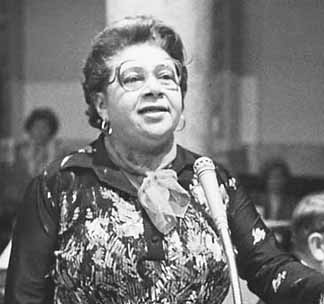
Georgia Powers certainly had no intention of doing that. On the contrary. She worked closely with King in the 1960s, organizing to end discrimination in public accommodations and employment and pass open housing laws. In 1967, she became that first Black and first woman elected to the Kentucky State Senate, a position she held with distinction for the next 20 years. During her first term, less than a month before King’s death, she spearheaded passage of a statewide open housing bill. After a distinguished career, she passed away in 2016 at 93 years old. She was in her early 70s when we first met in 1997.
.
MLK and Georgia Powers
As she explained then, her relationship with King was more than professional. Her 1995 book, I Shared the Dream, described how their work together led to a love affair that continued until the last moments of his life. Keeping that secret for almost three decades, she went public only after other civil rights leaders released inaccurate accounts of their relationship and the events surrounding King’s death.
.
She was particularly upset by a comment in And The Walls Came Tumbling Down , an autobiography written by Ralph Abernathy, King’s close friend and confidante. Although willing to attribute Abernathy’s repetition of Hoover’s smear to illness and poor memory, she felt compelled to set the record straight. “When Dr. King’s life is researched,” she wrote, “I want the part relating to me to be available in my own words. It is my own history as well, both the good and the bad.”

It began with mutual admiration, she explained, and “progressed into a deepening friendship in which we shared opinions, confidences, and laughed often.” She called him “M.L.,” and he called her “Senator.” But King was under tremendous pressure, and ultimately turned to Georgia for intimacy and emotional support, she claimed. Although they sometimes discussed issues and strategies, his main unmet need was time to let his hair down and set his cares aside.

“Some people called him a prophet, and compared him with Jesus,” she recalled. While she did believe that he was divinely inspired, “I knew Martin had all the imperfections, foibles, and passions of a mortal man.” A meticulous person with an affection for silk suits, he enjoyed laughter and jokes, barbecued ribs and soul foods, not to mention the company of attractive women. In short, she said, “He had a good appetite for life.”

He also had a strong sense that he wouldn’t get to see his visions come to pass. Tired and melancholy one night, he told her, “I’m just as normal as any other man. I want to live a long life, but I know I won’t get to.”

Georgia was in Memphis with King on the day he died. The previous night he’d confided, “I’ve never been more physically and emotionally tired.” On April 4, they waited most of the day to see if a temporary restraining order against the planned demonstration would be lifted. But King was adamant. Regardless of what the court decided, he promised, “We will march on Monday.” When Abernathy asked whether he feared what might happen, King answered softly, “I’d rather be dead than afraid.”

As the meeting broke up and the group prepared for a soul food dinner, King brushed past Georgia on his way out the door. “I’m looking forward to a quiet and peaceful evening,” he said. “Don’t make any plans.” They were the last words he ever spoke to her. Moments later he was shot.
^^^
Looking back, Georgia regretted that her actions may have hurt others, especially King’s wife. But despite those feelings, she didn’t regret her decision, insisting that it wasn’t just some tawdry affair. “When we were together,” she recalled, “the rest of the word, whose problems we knew and shared, was far away. Our time together was a safe haven for both of us. There we could laugh and speak of things others might not understand. He trusted me, and I him, not to talk about it.”

As the years passed, however, she became increasingly uncomfortable with the rumors that distorted their relationship. She also realized that her own life, like so many, was full of hidden truths. One was her ancestry. Although she didn’t know the identity of her father’s father, she eventually learned that he was White. Another involved her great aunt Celia Mudd, who was born into slavery but eventually inherited the rural Kentucky farm on which she spent all her life.
.
Eventually, she uncovered most of Celia’s story. The key was a 1902 will in which Sam Lancaster, whose father had bought the Nelson County farm, left it to his most trusted employee – the former slave whom Georgia knew as Aunt Celia. That fateful decision led to a court battle with Sam’s surviving brother. The case went to Kentucky’s highest court, yet most newspapers declined to report about it. A Black woman inheriting more than 500 acres of land from a White man apparently wasn’t considered news. Neither was the fact that Celia Mudd went on after winning the case to become a local philanthropist, admired by Blacks and Whites alike. 

Powers and I collaborated on a novel , Celia’s Land,* that explores this forgotten history. During the research I visited the farm on which Celia spent her life. Stepping into the old slave quarters where she was born, I reflected on how much we still don’t understand about that time, when Whites believed Blacks were no more than property. I also thought about how often racism is still ignored, distorted, or downplayed.

Rather than the petty arguments, name-calling and cruel distortions that often characterize political discourse these days, what we need is the courage to face our own and society’s uncomfortable realities – to openly acknowledge them, replace hatred with compassion, and stop accepting convenient myths.
  (Original version posted on April 4, 2008; most read post, Jan. 2012)
^^
* In addition to working with Georgia on the book I have written a play, The Inheritance, also based on Celia Mudd's story.

Sunday, December 30, 2018

1968: When the World Was Watching

Opening a Senate investigation of the Tonkin Gulf Resolution in early March 1968, Senator J. William Fulbright described what was taking place across the country as a "spiritual rebellion" of the young against a betrayal of national values. The Resolution, passed in 1964, had given President Johnson a blank check to wage war against Vietnam, based on a trumped-up military incident. Subsequently, over half a million troops were mobilized to prevent a North Vietnamese victory, using fears of communism and falling dominoes to rationalize what soon became a major invasion. 

By 1968, the operative logic was that it might be necessary to destroy the divided Asian nation in order to save it.

Back in the US, anti-war and "stop the draft" protests were on the rise. Even members of the Johnson administration and media establishment were having second thoughts. On returning from Vietnam, Walter Cronkite, the nation's TV "uncle," announced that the only "rational way out" was to negotiate a settlement. Meanwhile, the president's "wise men" advised that a change of policy was unavoidable.

But other forces were also at work. Responding to campus and New Left activism, the FBI concluded that a counter-intelligence program was needed to "expose, disrupt, and otherwise neutralize" the growing anti-war movement. Suggested tactics included instigating personal conflicts and animosities, spreading rumors that movement leaders were Bureau informants, arresting activists on marijuana charges, using "misinformation" to "confuse and disrupt," sending damaging anonymous letters to parents and officials, and exploiting "cooperative press contacts." If anyone was bringing the war back home, it was the FBI.

In mid-March, Eugene McCarthy, an ardent opponent of the war, won an astonishing 42 percent of the Democratic primary vote for president in New Hampshire. Four days later, Robert Kennedy entered the race, and by the end of the month Johnson announced he wouldn't seek re-election. But on the same day that Kennedy made his move, US soldiers lined up hundreds of old men, women, and children in the South Vietnamese village of Mai Lai and shot them dead, one of several massacres that remained secret until the end of the decade.

Just as the US was looking for a way out, it was losing its soul.

"Everywhere we talk liberty and social reform," wrote the prescient muckraker I.F. Stone in the midst of growing chaos, "but we end up by allying ourselves with native oligarchies and military cliques – just as we have done in Vietnam. In the showdown, we reach for the gun."

On April 4, a shot rang out in Memphis, ending the life of Martin Luther King, Jr. Afterward, riots erupted in 125 cities, resulting in over 20,000 arrests and the mobilization of federal troops and the National Guard. Two months later, Kennedy was assassinated in Los Angeles, just after winning the California primary race. By July, there had been over 220 major demonstrations on campuses across the country. Despite clear signs of deepening social conflict, however, the war overseas continued to escalate. In the first five months of the year, almost 10,000 soldiers died in Vietnam, more than in all of 1967. At home, the violence and repression were just beginning.

"Keep clean for Gene" buttons were a familiar sight at the 1968 Democratic National Convention that August. But the protesters maced and beaten outside the meeting hall knew that McCarthy, the peace candidate, and his supporters inside were symbolically undergoing the same ritual. Barbed-wire fences around the amphitheater had led to the grim joke that the delegates were all prisoners in "Stalag 68." Keeping clean obviously wouldn't be enough.

Many who went to Chicago that summer and witnessed what became a police riot emerged either broken or radicalized. For them, the power structure had crossed a basic boundary, moving dangerously close to fascism. Even after McCarthy's headquarters was raided, the Democratic candidate for president, Hubert Humphrey, couldn't bring himself to criticize Mayor Daley's Gestapo tactics. Meanwhile, the party's plank on the war offered little solace, supporting the logic of its most hawkish elements. In short, the war was destroying the country, just as the US military was destroying Vietnam.

In the months that followed the 1968 Democratic Convention, activists preached liberation with even greater zeal. But the obstacles also increased, including a crescendo of busts aimed at leaders of the expanding movement. The FBI's counter-intelligence program was starting to take hold. Several pretexts were used for the arrests, among them dope, assault, obstruction of justice, and an “anti-riot” law. There were also lesser charges, such as "Failure to fasten the seat belt on a Rochester-Buffalo flight" – filed against the Yippie leader Abbie Hoffman, vandalizing a representation of Smokey the Bear, and disrespect for the flag by hanging it as a curtain – even though advertisers were using the same design to sell canned tomatoes and deodorant. Apparently, it was all a matter of "intent." Using the flag to sell products was patriotic, but hanging it across a window was disrespectful, an un-American act.

In November, Richard Nixon profited from the polarization and disillusionment, winning the presidential election in one of the closest votes in US history. During his campaign, he promised to end the war "and win the peace." Once in office, he quickly reversed himself, expanding it into Cambodia with over a year of secret bombings. Meanwhile, his attorney general, Richard Kleindienst, called anti-war activists "ideological criminals."

Before the end of the decade, the list of martyrs included Che Guevara, executed in Bolivia after a misguided attempt to export the Cuban revolution; Andreas Papandreou, the Greek reformer overthrown in a military coup that put CIA agent George Papadopoulos in power; Kwame Nkrumah, the brilliant anti-imperialist president of Ghana whose socialist leanings sparked another CIA-backed military takeover; and Fred Hampton, the Chicago Black Panther leader who was shot in his bed on December 4, 1969 as part of the FBI's obsessive crusade to destroy militant black groups.

Historian Eric Hobshawm wrote, "If there was a single moment in the golden years after 1945 which corresponds to the simultaneous upheaval of which the revolutionaries had dreamed after 1917, it was surely 1968, when students rebelled from the USA and Mexico in the West to socialist Poland, Czechoslovakia and Yugoslavia, largely stimulated by the extraordinary outbreak of May 1968 in Paris, epicentre of a Continent-wide student uprising."

In France, student strikes sparked a nationwide revolt that demolished the liberal myths of permanent stability in advanced societies. In Czechoslovakia, reformers defied Soviet power during the revolt known as Prague Spring. In Brazil, Chile, and Mexico, student uprisings challenged authoritarian rule. But the backlash was fierce and deadly. As Soviet tanks canceled reform in the East Bloc, soldiers opened fire on hundreds of students in Mexico City, and legalized repression came to the United States. 

Half a century on, the wounds still haven't healed and the betrayals and lies continue.

From Dangerous Words: Part eight of “In the 60s: Education of an Outsider.” 

Tuesday, December 11, 2018

Maverick News (12/5/08): Strategy Shifts

Ten Years ago.... This week: War Zones – Afghanistan at the brink, the geopolitics of Mumbai, and the problem with pirates; Prospects for Single Payer, food stamps soar, and an obesity update. Music: Vinyl Resurgence and celebrating Odetta. Vermont: Gearing up for Gay Marriage, and Burlington’s Mayoral race. Plus, Drug News: Meth moves south and ending drug prohibition. Live Broadcast Friday, December 5, 2008, Noon EST, on The Howie Rose Show (WOMM), written and presented by Greg Guma, streamed on The Radiator.

AFGHANISTAN AT THE BRINK. The collapse of Afghanistan is closer than you think. Kandahar is in Taliban hands - all but a square mile at the center of the city - and the first Taliban checkpoints are scarcely 15 miles from Kabul. Hamid Karzai's corrupt government is almost as powerless as the Iraqi cabinet in Baghdad's "Green Zone." Lorry drivers carry business permits issued by the Taliban, which runs the courts in remote areas.

The Red Cross warns that humanitarian operations are being drastically curtailed. More than 4,000 people, at least a third of them civilians, have been killed in the past 11 months, along with NATO troops and about 30 aid workers. Both the Taliban and Karzai's government are executing their prisoners in greater numbers.

According to one Kabul business executive, nobody wants to see the Taliban back in power, but people hate the government and there's mass unemployment.

Afghans working for charitable groups and the UN are being pressured to give information to the Taliban and provide them with safe houses. In the countryside, farmers live in fear of both sides in the war. In short, seven years after 9/11 and the US overthrow of the Taliban we’re almost back to square one.

MUMBAI: WHAT’S AT STAKE. A virtually unknown group called "the Deccan Mujahideen" has claimed responsibility for the recent attacks in India. The Deccan Plateau refers to a region of central-Southern India. According to police sources, attackers who survived say they belong to Lashkar-e-Tayyiba, a Pakistani Kasmiri separatist organization covertly supported by Pakistani military intelligence, known as the ISI. Both Western and Indian media point at Pakistan and its alleged support of Islamic terrorist groups.

Here’s where it gets complicated. The ISI is a proxy of the CIA. Since the early 1980s, Pakistani intelligences has worked closely with its US and British intelligence counterparts. Thus, if the ISI was involved in a major covert operation directed against India, the CIA should have had prior knowledge about the nature and timing of the operation. The ISI isn’t known to act without the consent of its US intelligence counterpart.

Due to this connection, some analysts say that, whether or not US intelligence knew in advance, the US will use the Mumbai attacks to stir up divisions between Pakistan and India, justify US military actions inside Pakistan, and extend the "war on terrorism."

If you don’t buy that, there’s at least one other possibility. As a result of the attacks, Pakistan may relocate 100,000 troops currently at the Afghan border to the Indian border. If that happens, US operations on the border with Afghanistan will become more difficult, since it relies on Pakistani troops to assist with its border operations, and especially to protect the supply route for US operations. Who gains in this scenario: Al Qaeda.

Whoever knew or did what, what are the options? Bomb suspected terrorist cells in India? Send the Marines to Kashmir? Regime change in Pakistan? None or these would be very helpful. Yet the Bush administration pursued similar tactics against the Taliban in Afghanistan, Saddam Hussein in Iraq, and suspected terrorist hideouts in Pakistan. Heck of a job.

The Taliban is back in Afghanistan. Al-Qaeda, which didn't exist in Iraq before the invasion, has a foothold there now. And Pakistan, thanks to former dictator Pervez Musharraf and his intelligence agency, remains Terrorism Central.

Unfortunately, India may now go down the same road, staging its own war on terror. According to the Times of London, "The Indian government is now considering a range of responses, including suspending its five-year peace process with Pakistan, closing their border, stopping direct flights and sending troops to the frontier." It's one thing when the US squares off against the Taliban. But both India and Pakistan have nuclear weapons, so any "war on terror" between those two can go global at a moment's notice.

There is an alternative. Instead of using the military, for example, the British have largely relied on police work to track down and neutralize terrorists. Both the UN and Interpol focus on sharing information among police forces and shutting down the financing of terrorist networks. In other words, instead of fighting fire with fire, the flames could be doused with water. And the most effective fire extinguisher is still the rule of law.

PIRATE POLITICS. In the 18th century, Britain hung pirates in public. The idea was to make it look like not a very good career option. Now, three centuries later, pirates sail the high seas with near impunity – stealing, blackmailing and intimidating commercial ships. And it's not clear who can or should be the pirate police.

An international fleet of warships, including US, British, Danish, Italian, Greek, French and Canadian ships, is operating in the waters off Somalia. The International Maritime Bureau estimates 100 pirate attacks have occurred there this year.

Last week, for example, pirates tried to attack a US cruise ship, the MS Nautica, with over 1,000 people on board. The ship outran the pirates, but other ships haven’t been as lucky – like the Saudi oil tanker seized late last month with its crew and $100 million worth of oil.

Anyone can step up to battle the pirates. But bringing weapons on board ships is "strongly discouraged" by the UN International Maritime Organization, and experts say that arming commercial crews is a bad idea since it can lead to an international incident.

Since most crews don't carry weapons, ships resort to non-violent methods to ward off the pirates, including long-range acoustic devices that blast loud, irritating noises. Sounds wimpy, but it’s apparently the most annoying sound you've ever heard. It can actually make you nauseous. Other non-lethal methods include electric fences and hoses that spray pirates with water and knock them off their ladders before they can climb on board.

But non-violence isn't always effective. Last week, when pirates struck a chemical tanker in the Gulf of Aden, three guards from a British anti-lethal security company, Anti-Piracy Maritime Security Solutions, couldn’t fend off the pirates and eventually threw themselves overboard to avoid capture.

The UN Security Council has extended its authorization for countries to enter Somalia's territorial waters with advanced notice and to use "all necessary force" when combating piracy. The US security firm Blackwater, which operates in Iraq, announced in October that it was making its 183-foot ship, the McArthur, available to companies looking to hire security. Great movie concept. But as a foreign policy, not so much.

And still, even when the pirates can be defeated, there’s a problem. Nobody wants responsibility for the pirates, especially when they come from war-torn places like Somalia. Plus, if they hand the pirates over to the wrong country, they sometimes claim asylum. So far, the new pirates are apparently beating the system.

NATIONAL SCENE

WHAT ABOUT SINGLE PAYER? You might not know it, but in each of the last several sessions of Congress, Rep. John Conyers has introduced single payer health care legislation. The current bill is HR 676, the Conyers-Kucinich National Health Care Act, endorsed by dozens of city councils, state legislatures, county governments, and 90 members of Congress, including more than 30 members of the Congressional Black Caucus. Organizations like the Citizens Alliance for National Health Care are raising money to buy ads for a national media campaign. Yet, the bill has been virtually invisible in mainstream media.

While Barack Obama has promised "universal health care," he and his advisors have explicitly rejected single payer health care. During the campaign, he managed to avoid mention of it except for a few unscripted moments when asked in public. Instead, he and his team want to make government money available to buy private health care, and subsidize a new risk pool, most likely through private insurers, for people who can't find any affordable private coverage.

So, if single payer legislation doesn’t make it to the floor this time, the blame can clearly be laid at the feet of the new president and his party.

FOOD STAMPS SET A NEW RECORD. The US poised to set a new record in food stamp use, more than 30 million people. The previous record was set in 2005, after Hurricane Katrina displaced a million refugees from one of the poorest cities in the country. If all the eligible people were enrolled, another 10 million families might be getting them.

A dollar spent on food stamp benefits generates $1.73 of economic activity, according to economists. This multiplier affect beats even the impact of unemployment insurance. But the purchasing power of food stamps hasn’t kept pace with the inflation in food prices, currently 6.5 percent and expected to hit 8 percent by the end of the year.
TO LOSE WEIGHT, HOLD THE ADVERTISING. Want to cut national obesity? We could cut at least 18 percent of America’s fat just by banning fast-food advertising to children. That’s according to a new study by the National Bureau of Economic Research and National Institutes of Health. Not unexpectedly, the Center for Consumer Freedom, a front group for the restaurant and fast-food industry, calls the study "erroneous" because one of the authors admits that "a lot of people consume fast food in moderate amounts and it doesn't harm their health." But this doesn’t contradict the study's basic findings. Previous studies have reached similar conclusions.

MUSIC

VINYL RESURGENCE. Shipments of LPs jumped more than 36 percent from 2006 to 2007 to more than 1.3 million, according to the Recording Industry Association of America. During the same period shipments of CDs dropped more than 17 percent to 511 million, losing ground to digital formats. Based on the first three months of this year, Nielsen Sound Scan says vinyl album sales could reach 1.6 million in 2008.

The resurgence of vinyl centers on a long-standing debate over analog versus digital sound. Digital recordings capture samples of sound and place them very close together as a complete package that sounds nearly identical to continuous sound to most people. Analog recordings on most LPs are continuous, which supposedly produces a truer sound – though some new LP releases are being recorded and mixed digitally, then delivered analog.

But it's not just about the sound. Audiophiles say they also want the overall experience – the sensory experience of putting the needle on the record and lingering over the liner notes or large format extras.

"I don't think vinyl is for everyone; it's for the die-hard music consumer," said Jay Millar, director of marketing at United Record Pressing, a Nashville based company that is the nation's largest record pressing plant.

Independent music stores, the primary source of LPs in recent years, say many fans never left the medium. "People have been buying vinyl all along," says Cathy Hagen, manager at 2nd Avenue Records in Portland. "There was a fairly good supply from independent labels on vinyl all these years. As far as a resurgence, the major labels are just pressing more now."

Some of the new fans are baby boomers nostalgic for their youth. But to the surprise and delight of music executives, increasing numbers of the iPod generation are also purchasing turntables and vinyl records. Contemporary artists have begun issuing their new releases on vinyl in addition to CD and MP3 formats. As an extra lure, labels are including coupons for free audio downloads with their vinyl albums so that Generation Y music fans can get the best of both worlds: high-quality sound at home and iPod portability for the road.
While new records sell for about $14, used LPs go for as little as a penny or as much as $2,400 for a collectible, autographed copy. In October, Amazon.com introduced a vinyl-only store and increased its selection to 150,000 titles Its biggest sellers? Alternative rock, followed by classic rock.

VOICE OF A MOVEMENT. Odetta, the folk singer with the powerful voice who moved audiences and influenced fellow musicians for a half-century, died last week at 77 of kidney failure. In spite of failing health that restricted her to a wheelchair, Odetta performed 60 concerts in the last two years, singing for 90 minutes at a time.

With a booming, classically trained voice and spare guitar style, Odetta gave life to the songs by workingmen and slaves, farmers and miners, housewives and washerwomen, blacks and whites. First coming to prominence in the 1950s, she influenced Harry Belafonte, Bob Dylan, Joan Baez and other singers who had roots in the folk music boom. When she sang at the March on Washington in August 1963, "Odetta's great, full-throated voice carried almost to Capitol Hill," The New York Times wrote.

Among her notable early works were her 1956 album "Odetta Sings Ballads and Blues," with songs like "Muleskinner Blues" and "Jack O' Diamonds"; and her 1957 "At the Gate of Horn," featuring the popular spiritual "He's Got the Whole World in His Hands."

In a 1983 Washington Post interview, Odetta theorized that humans developed music and dance because of fear, "fear of God, fear that the sun would not come back, many things. I think it developed as a way of worship or to appease something. ... The world hasn't improved, and so there's always something to sing about."

"I'm not a real folksinger," she told The Post. "I don't mind people calling me that, but I'm a musical historian.”

VERMONT

GEARING UP FOR GAY MARRIAGE. Last week Windsor Senator John Campbell promised to reintroduce and push a gay marriage bill in 2009. Governor Douglas has reiterated his opposition, arguing that the debate will distract Vermont from other important issues. He declines to say whether he would veto a bill. Senate leaders have indicated that they aren’t sure whether this will be a priority, and some have questioned whether the Legislature can address our civil rights and deal with the economic challenges in the same session.

Here’s what Senator Campbell wrote in defense of the bill:

“Please rest assured, the civil rights of all Vermonters will be a central issue for me in the upcoming session, alongside the economy, the State's financial challenges, and other critical matters. Although I had hoped that the Governor would step up and share leadership on this important issue, I am not waiting for his advance approval on this. It's too important, and our job is to lead. There's no tension between eliminating discrimination in our laws and meeting the economic challenges we face. Our legislature works through committees, and always tackles dozens of important matters at once. With the foundation laid by the Vermont Commission on Family Recognition and Protection, on which I served, the Legislature should be able to address a marriage bill thoughtfully and efficiently. Plus, making Vermont a discrimination-free zone will help our economy by supporting our tourism industry and giving our businesses a competitive advantage.

“I realize that Vermont is ready to move forward. In my work on the Vermont Commission on Family Recognition and Protection I heard from hundreds of Vermonters whose lives are impacted in a real and significant way by our marriage law's exclusion of same-sex couples. It's time to take the next step. Together, I'm confident we can."

MAYORAL SWEEPSTAKES. The race for Burlington mayor got a little more crowded last week as Dan Smith, attorney for the Greater Burlington Industrial Corp. announced his candidacy as an indepedent. Smith is the son of former US Rep. Peter Smith and great grandson of a founder of Burlington Savings Bank. The other candidates are current Mayor Bob Kiss, a Progressive, and City Council member Andy Montroll, a Democrat. Republican Council President Kurt Wright is also likely to run.

DRUG NEWS

METH MOVES SOUTH. Drug violence, including decapitations and grenade attacks, has killed some 4,500 people in Mexico this year, but thousands of others are falling victim to a quieter crisis: addiction to methamphetamine. Mexico is now the largest producer of meth for the US market and traffickers are finding a growing number of users at home, many of them minors.

Meth use in Mexico has quadrupled in the last six years, according to a survey by their health ministry. As US authorities cracked down in recent years on the sale of the drug's ingredients, busting "mom and pop" labs in blue collar garages and bathrooms, Mexican gangs that already smuggled huge quantities of cocaine and marijuana into the US moved in to meet the demand for meth. They’re now churning out tons of meth in "super labs."

ENDING THE NEW PROHIBITION. Albert Einstein defined insanity as doing the same thing repeatedly and expecting different results. His definition perfectly fits the US war on drugs, a multi-billion dollar, four-decade exercise in futility.

This war has helped turn the US into the country with the world’s largest prison population. The US has 5 percent of the world’s population but around 25 percent of the world’s prisoners. Under the headline “The Failed War on Drugs,” Washington’s middle-of-the-road Brookings Institution said in a November report that drug use hasn’t declined significantly over the years and that “falling retail drug prices reflect the failure of efforts to reduce the supply of drugs.”

This brings us to Law Enforcement Against Prohibition (LEAP), an organization started in 2002 by police officers, judges, narcotics agents, prison wardens and others with first-hand experience of implementing policies that echo the prohibition of alcohol. Prohibition, widely regarded a dismal and costly failure of social engineering, came to an end 75 years ago this month.

As LEAP sees it, the best way to fight drug crime and violence is to legalize drugs and regulate them the same way alcohol and tobacco is now regulated. “We repealed prohibition once and we can do it again,” one of the group’s co-founders, Terry Nelson, told a Washington news conference on December 2. “We cannot arrest our way out of this problem.”

These advocates of drug legalization hope that the similarities between today’s economic crisis and the Great Depression will result in a more receptive audience for their pro-legalization arguments.

The budget impact of legalizing drugs would be enormous, according to a study prepared to coincide with the 75th anniversary of prohibition’s end. Harvard economist Jeffrey Miron estimates that legalizing drugs would inject $76.8 billion a year into the US economy — $44.1 billion through savings on law enforcement and at least $32.7 billion in tax revenues from regulated sales.

Miron published a similar study in 2005 looking only at the budgetary effect of legalizing marijuana. That study was endorsed by more than 500 economists, including Nobel laureates Milton Friedman of Stanford University, George Akerlof of the University of California and Vernon Smith of George Mason University.

“We urge…the country to commence an open and honest debate about marijuana prohibition,” the economists said in an open letter to President Bush, congress, governors and state legislators. “At a minimum, this debate will force advocates of current policy to show that prohibition has benefits sufficient to justify the cost to taxpayers, foregone tax revenues and numerous ancillary consequences that result from marijuana prohibition.”

ORIGINALLY POSTED ON DECEMBER 5, 2008 

Tuesday, September 25, 2018

Media, Democracy & the Post-Modern Age

The Truth Deficit

In the Watergate era, journalists were often seen as heroes. Even commercial TV and radio news outlets, although on the way to becoming showcases for infotainment, were considered by many to be potential parts of the solution. By the end of the 20th Century, however, most people didn't trust reporters any more than politicians, and a Roper poll found that 88 percent of those surveyed felt corporate owners and advertisers improperly influenced the press.

Most journalists who work for mainstream media outlets deny such influence, a lack of self-awareness (or candor) that tends to make matters worse. The fact that getting ahead means at times going along with the prevailing consensus remains one of the profession's debilitating secrets. But the issue isn't just that, or that a few media giants control the origination of most content, distribution, and transmission into our homes and computers, or that we're heading toward a pay-for-access Internet world that could make notions about its democratic potential sound like utopian fiction. The underlying problem is how public discussion of vital matters is shaped by gatekeepers.

Here’s an example that remains relevant in the age of Trump: In August 2005, a cover story in Newsweek on Supreme Court nominee John G. Roberts aggressively dismissed reports that he was a conservative partisan. Two primary examples cited were the nominee's role on Bush's legal team in the court fight after the 2000 election, described by Newsweek as "minimal," and his membership in the conservative Federalist Society, which was pronounced an irrelevant distortion. Roberts "is not the hard-line ideologue that true believers on both sides had hoped for," the publication concluded.

The facts suggested a different appraisal. Roberts was a significant legal consultant, lawsuit editor and prep coach for Bush's arguments before the U.S. Supreme Court in December 2000, and wasn’t just a Federalist Society member but on the Washington chapter's steering committee in the late 1990s. More to the point, his roots in the conservative vanguard date back to his days with the Reagan administration, when he provided legal justifications for recasting the way government and the courts approached civil rights, defended attempts to narrow the reach of the 1965 Voting Rights Act, challenged arguments in favor of busing and affirmative action, and even argued that Congress should strip the Supreme Court of its ability to hear broad classes of civil-rights cases.

Nevertheless, most press reports echoed Newsweek's excitement about his "intellectual rigor and honesty."

Given the Supreme Court’s decisions since Roberts became Chief Justice, whether the narrative framing of his confirmation qualifies as disinformation is worth considering. In any case it shows how journalists may assist political leaders, albeit sometimes unwittingly, in shaping public awareness. As a practice, this is known in both government and public relations circles as "perception management," and it’s been happening for years.

That's why I was eager to attend the second Media and Democracy Congress in 1998. Journalists and media activists from across the country had gathered in New York to talk about the problems – things like concentration of ownership, the relentless slide into infotainment, an avalanche of gossip, disinformation, and "news" people don't need – and trade ideas about what to do. It was encouraging to be among colleagues and friends who weren't afraid of the A-word – advocacy.

During one panel journalistic iconoclast Christopher Hitchens noted wryly that the word partisan is almost always used in a negative context, while bipartisan is presented as a positive solution. It made me think: If that isn't an endorsement for the one-party state, what is?

Similarly, most journalists assiduously avoided saying, in print or on the air, that George W. Bush, Bill Clinton or Ronald Reagan lied while president, although these were verifiable facts. But they did often note that Clinton and Reagan were great communicators, which is merely an opinion. The issue, Hitchens suggested, wasn't a lack of information – it's all out there somewhere – but how most reporters think and how the news is constructed.

Which brings us to the “free market” and competition, two basic tenets of the corporate faith. Unfortunately, most journalists are loyal missionaries of the Capitalist Church, the kind of true believers who described utility deregulation in the late 1990s as a "movement to bring competition to the electric industry." That was a classic corporate sermon, not a fact. The same kind of thing was said – when anything was mentioned – about the Telecommunications Act of 1996, although the actual result of that legislation was to reduce competition and sweep away consumer protections.

In 2009, when Sen. John McCain introduced The Internet Freedom Act, designed to “free” giant telecom companies from restrictions on their ability to block or slow down access to the content of their competitors, the sermon hadn’t changed. For example, The Wall Street Journal announced that he was just trying to stop regulators from “micromanaging the Web.”

The mainstream media also had little to say about the giveaway of the digital TV spectrum, a prime example of corporate welfare. Making the giants pay for this enormous new public resource could have dramatically reduced the federal deficit and adequately funded public broadcasting and children's TV. Instead spectrum rights were handed out for free. The only "string" was a vague contribution to be determined at a later date.

The Media and Democracy Congress did propose some alternatives: anti-trust laws to deal with the new world of global media, a tax on advertising – including the millions in political contributions that mainly end up in the coffers of media corporations – to adequately fund public broadcasting and public access, corporate divestment of news divisions, and a ban on children's advertising, to name a few. Unfortunately, none of this came to pass.

A year Later Democracy Now! host Amy Goodman and reporter Jeremy Scahill, who went on to write a groundbreaking book about the private military contractor Blackwater, provided a dramatic illustration of just how limited mainstream media’s commitment to truth-seeking and keeping watch over the government can be. The dust up occurred at the 1999 awards ceremony organized by the Overseas Press Club. Goodman and Scahill were on hand to receive honors for their documentary, “Drilling and Killing: Chevron and Nigeria’s Oil Dictatorship.”

Realizing that the event’s keynote speaker was UN Ambassador Richard Holbrooke, an architect of NATO’s recently declared intervention in Yugoslavia, the urge to ask him some questions was irresistible. But they were prevented from talking to him prior to the speech, and Scahill subsequently learned that a condition of Holbrooke’s appearance was no interviews. Undaunted, he waited until the ambassador finished speaking, then approached the podium and tried again.

At that point Master of Ceremonies Tom Brokaw intervened. But not to defend Scahill’s right to inquire. No, instead the anchorman told him to sit down. When Scahill declined he was dragged away by security guards.

None of the noted journalists in the room uttered a word of protest. At a time when bombs were falling in Europe they apparently felt that “decorum” was more vital than finding out why a war had started. The official story was that the government of Slobodan Milosevic had refused to negotiate on Kosovo and was engaged in a brutal campaign of "ethnic cleansing" that bordered on genocide. NATO was intervening to prevent a "humanitarian catastrophe," claimed official sources, and sought only to alleviate human suffering and defend the rights of Kosovo's Muslim Albanians. But a series of stubborn facts, largely ignored by the mainstream media, contradicted those comforting assertions.

In February 1999, when so-called peace talks began in France, Yugoslavia was given an ultimatum: Grant Kosovo autonomy and let NATO station 30,000 troops there for the next three years – or else. If anyone was refusing to negotiate, it was the US and NATO. But the relentless use of buzzwords like ethnic cleansing and genocide, plus the redefinition of Milosevic as the world's latest “Hitler," gave this unyielding stance the veneer of humanitarian concern. Entirely omitted was the inconvenient reality that the violence in Kosovo was a part of an ongoing struggle between the government and separatists, who had been waging civil war for years.

So, why intervene, and why against the Serbs? The likely hidden agenda was to break Yugoslavia into smaller pieces. The Balkans is a strategic region, a crossroads between Western Europe and the oil-rich Middle East and Caspian Basin. In the 1990s, the Western powers had gained effective control over the former Yugoslav republics of Croatia, Bosnia, and Macedonia, as well as Hungary and Albania. The main hold out was the Federal Republic of Yugoslavia. In short, it stood in the path of the New World Order.

Another year passed, and in 2000, Goodman and Scahill recounted their Press Club experience to enthusiastic applause at the annual Project Censored awards ceremony. Now they were being recognized for covering the story the Press Club had suppressed: NATO’s deliberate push for war with Yugoslavia. Despite the self-imposed ignorance of corporate media’s gatekeepers, at least some of the truth had been revealed. (Originally posted in 2010)

Part Two: Navigating uncertainty in post-modern times

Wednesday, August 1, 2018

Alternative Media: From Phoenix to Vanguard

The growth of local and regional newspapers was the leading alternative press development of the 1970s. By the end of the decade there were several statewide weeklies, strong city papers, and smaller weeklies that had outgrown their original campus audiences. 
      They varied widely in style and tone – from the soft features of the Chicago Reader to the rough investigative journalism of the Bay Guardian – but shared a preference for the local slant, occasionally reflecting the global in smaller forms.
      No paper exploited the new commercial-friendly formula with more success than the Boston Phoenix, which was reaching over 100,000 readers by the end of the decade with fat, multi-section, ad-packed editions. The paper’s story began back in 1965 with a former MIT student newspaper editor, Joe Hanlon, who had the idea for an art insert to the Harvard Business School’s paper. Within a year it became an independent publication called Boston After Dark. Partners came and went, and by 1969 it was owned by Stephen Mindich, a Boston U grad who had started by selling ads. After Dark built its circulation by giving away papers on campuses and selling them elsewhere.
      There was a brief challenge. Vietnam vet Jeffrey Tarter saw the chance to combine arts coverage with local muckraking and started The Cambridge Phoenix, tapping into the area’s deep talent pool. But he couldn’t make it viable and soon sold to two local entrepreneurs. They hired a professional, beefed up the paper editorially and financially, and got vendors to hawk it downtown. It didn’t take long for the Phoenix to outclass its predecessor.
      Mindich adjusted, adopting the competition’s design and edgy style, even hiring his own vendors. He also added local news. Both papers prospered, packed with free classifieds and youth culture “guides.” It was a perfect market, half a million young people in the metropolitan area, and they had captured it by keeping the content sharp – but not too radical. The object was to be both hip and mainstream.
      Ultimately, Mindich bought the competition and took the name. The Phoenix staff got word in a brief announcement from publisher Richard Missner, a wealthy Harvard Business School grad. They were all fired. No notice, no severance pay, nothing. It was therefore no surprise when former Phoenix staffers started a paper of their own, The Real Paper. Theirs would be a staff-owned business, operated by consensus, giving everyone a vote in major decisions. 
      The experiment lasted nine years, but in the end The Real Paper folded while the Boston Phoenix became Phoenix Media/Communications Group, a New England mini-chain with radio stations and similar papers in Providence and Portland.

Vanguard Press 1979      

By 1977 the Boston Phoenix was already a prime example of how hip design, youth-oriented content and ruthless determination could capture a market. The lesson wasn’t lost on Steve Brown, one of the former Vermont Cynic staffers who’d dreamed of starting their own paper. After finishing school he had worked for Mindich, absorbing the lessons and working out how to apply the Phoenix formula to Burlington and Vermont.
      The Eclipse, founded in Burlington by UVM grad Peter MacAusland earlier that same year, was a long-shot from the start. It had talent – especially ace reporter John “J.D.” Dillon and photographer Ron “RoMac” MacNeil – but not enough money to pay its staff, and nothing for promotion or decent management. That fall we nevertheless published a dozen strong issues, writing the first local investigative features the city had seen in years. 
      We exposed environmental threats and government corruption, watchdogged officials, and gave voice to the emerging progressive agenda. But MacAusland’s limited capital wasn’t enough to sustain it. The paper had been launched on faith, on the passionate belief that it needed to be done and would work out somehow. 
      It probably would have failed anyway. But two things hastened its demise – Steve Brown’s arrival and an unexplained fire in the production office.
      The fire hit especially hard. The previous year The Frayed Page, a bookstore I ran collectively with friends, had moved from its second floor walk up to a newly renovated building nearby. We had decided to co-locate with Bookstacks, a local independent bookstore. They handled new books, we bought and sold used editions — and had special sections on leftwing politics. The Eclipse eventually took over our old location. 
      It felt familiar attending meetings there. But by late November 1977 it was a charred ruin.
      Steve’s message was less devastating, but just as disorienting. He had enough money to launch a viable weekly, with decently paid staff and a sales strategy based on the Phoenix model. There would be both local news and a strong arts section. In fact, he already had some staff picked out. But there was room for more, especially in the editorial department.
     Why not throw in with The Eclipse? The question was asked, repeatedly. But Steve had a distinct vision and wanted to start fresh. No need for excess baggage, either image or people-wise. He also had a name in mind – The Vanguard.
      As it worked out, Steve couldn’t have the exact name he wanted. A handicapped access group already owned it. Instead he went with Vermont Vanguard Press. In the end, most people called it the Vanguard anyway. But he did get several Eclipse staffers — specifically, J.D., RoMac and me. In December The Eclipse released its last issue, with a full eclipse on its cover. A month later, in the middle of a brutal storm, the first issue of the Vanguard Press hit the street. 

Vanguard Press, 1980       

A decade later, in a book on Vermont’s progressive revolution, The People’s Republic, I looked back at it this way: “Editing the Vanguard Press was the job I had been waiting for all of my adult life. From the time I had landed in Vermont, a wide-eyed hippie, in 1968, to that snow-covered day in 1978 when we distributed the first copies, I’d been thinking about the potential of an “alternative” newspaper to change the consciousness of the state.”
      Becoming editor took almost a year, however, and didn’t come easily. Despite my “advanced” age – that is,  compared to most of the staff – and newspaper experience, Steve didn’t know me well or completely trust my intentions. His idea, he explained, was a hip paper that didn’t take sides. There would not even be an editorial page! Instead, he would showcase various columnists and feature writers, mixed with “straight” news. 
      The job on offer was staff reporter, which included writing a weekly column, contributing news items, and developing at least one cover feature a month. Aside from the pay it sounded perfect. 
      
Chapter 16 of Prelude to a Revolution, from Dangerous Words. Photo above: In the first Vanguard Press office are original staff members, from left, Jeffrey Polman, Arts Editor; John Dillon, Associate Editor (seated); Ron MacNeil, Photo Editor; and Carlo Wolff, first Editor-in-Chief.

Next: Spooks, Nukes, and Counterterror