Showing posts with label Transmedia. Show all posts

Wednesday, March 25, 2015

The Future of Community Radio

Will audiences keep tuning in to radio if the information and music they want can be more easily accessed by other means? Can FM compete with the quality and reliability of new portable devices? And will listeners continue to pay attention to long fund drive pitches? These are some of the difficult questions public and community radio must answer in the near future.
      At the moment websites and blogs are undermining newspapers, DVRs and TiVo are allowing viewers to skip commercials and time-shift the viewing of their preferred shows, and iPods are revolutionizing the way we access and consume music. The good news is that there are traits and features specific to radio that can help. But broadcasters need to open themselves to the inevitable convergence with new media and the Internet.
      So, how can community radio prepare for the future? Three ways: embrace convergence, focus on unique and thematic content, and use radio’s traditional strengths while combining them with the power of new technologies. This can lead to a new form of radio that doesn’t abandon the airwaves, but also brings quality programming that can’t be found elsewhere to new audiences and emerging media platforms.
     What are radio’s strengths, especially those can be leveraged and integrated with some of the new opportunities?
     IMMEDIACY: Radio’s edge is the ability to be truly "live." Instant real-time broadcasting can take place from nearly any place or location to chronicle live local – and national – events. There is considerable untapped potential here. Think street reporting, reality radio. Hearing a live voice is a totally different experience than any other. It can be powerful, touching and engaging. Being able to listen to something that is happening this very moment in another place is inherently fascinating. Returning to its roots, radio needs to leverage the huge potential of live coverage.
     EMOTIONAL POWER: Radio is about both informing and relating to people. When you do both, people change. As the great and underappreciated broadcaster Larry Josephson said, the power of radio is simple: it's personal. Radio needs to bring back the emotional power of direct, spontaneous reporting and talk delivered by strong, credible personalities. Without that, it will be difficult to compete with new portable devices. Like popular online media platforms, the successful community radio stations of the future will be characterized by a strong, unique style. Podcasting is already affecting radio, putting the heart back into it, focusing on unique content and a compelling source. Heart, passion, and a personal connection: These can’t be over-estimated.
     IDENTITY: Podcasting also draws attention to the value of niche entertainment and thematic content. Specific kinds of news, commentary or music become more important than generalized radio content that must appeal to as large an audience as possible. "New radio" needs to have a clear focus, theme and identity. This means applying some lessons from blogs and focused independent news sites to news, public affairs and music programming. Grassroots broadcast-plus-online radio stations can be debut vehicles for new music, news and reporting talent. Being a talent clearinghouse can be a very powerful theme in itself. Scouting, identifying and cultivating new talent is what some of the best bloggers and talent scouts do. Radio can do it too, especially as platforms multiply.
     THE LOCAL CONNECTION: Radio is ideal for maintaining a sense of community. This is especially true in times of emergency, or when a local event – a rally, accident, or tragedy – bursts upon the scene. People already realize that their needs and interests aren’t being well served by distant corporate entities with no real community connection or concern for local needs. A strong focus on "local" news, music, events, people and issues – especially coupled with "global" access – provides a winning combination. More people distrust “the media” in general these days, but they still have some confidence in their local outlets. Proximity can breed respect, something to be considered in the response to media consolidation.
     ADAPTABILITY: The distinction been producers and consumers is breaking down. In the future, radio will be more about the user participating in the show, potentially becoming a co-producer, host or DJ. In some cases listeners will become stars, contributors and creators of content. Technological developments make it possible for them to create shows, compilations, live entertainment, and become street reporters, reaching where few press reporters choose to go. Providing tools and programming space for them to develop, edit and compile their programming is a winning strategy that reflects the revolution taking place in other media. At an affordable cost, radio has the ability to adapt, providing tools, facilities and access to content that allows more people to research, edit and compile unique documentaries, investigative reports, artistic montages and focus-specific anthologies.
     As the current media revolution continues, radio stations can also become search engines for the specific content and music on which they focus. Some stations will build their programming by drawing thematic content from a wide variety of external sources and contributors. Stations will also become multi-media providers, offering video as well as audio – from a camera in the booth to exclusive coverage of actualities and special events. We’ll increasingly see webcasts and webisodes. Recording and archiving, something Pacifica Radio has done better than other radio operations, will also be increasingly important. Promoting ongoing access to shows, interviews or news items is inevitable.
     The change underway in mass media points to two common traits: convergence and participation. In the future, effective stations will be multi-channel and multi-format. Multi-format means gearing and adapting segments and shows for various audiences, something that doesn’t have to entail major costs. Multi-channel means making the content accessible via various platforms and applications to a multitude of media devices. Radio will also be more participatory, with listeners becoming active contributors.
     In terms of journalism, it’s not about Old vs. New Media, but fair and accurate reporting versus trivialized news and public relations spin. In any case, it’s better to think in terms of AND rather than OR; in other words, “mainstream” and “new media” journalists learning from one another. If more skills are shared and the best of both “new” and “old” are combined, today’s “citizen journalists” are more likely to become tomorrow’s responsible reporters and programmers – valuable messengers who deliver information and ideas that people can use, content that educates rather than distorts public discussion.
     So, will it be chaos or conversion? As Old Media risk becoming an archaic refuge for the elderly  New Media are entering their carefree adolescence. Online platforms may eventually be viewed as public utilities, and possibly even subject to regulation to protect the public's remaining privacy rights. For now, however, the outcome of this period of transformation remains an open question.
 
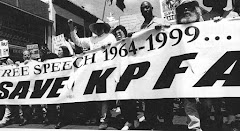
Originally posted on March 25, 2008. Last of four parts. Material in this "State of the Media" series was first presented in January 2008 at a KPFT-FM strategic planning retreat in Houston. Previous parts include A Crisis of FactWill Newspapers Survive? and Radio's Delicate Condition.

Monday, April 29, 2013

Live in White River: Vermont's Transmedia Festival

By Greg Guma

During the Vermont International Film Festival last year, I was talking in the hall with Nora Jacobson, producer of The Vermont Movie, a six-part collaborative documentary that will be released this fall and screened in theaters across the state.
     Given the growth of social media and desire of many festival-goers to share their reactions, I suggested that such gatherings could be more interactive. At that moment I was filing reviews with VTDigger.org, but felt that others attending might have something to add if given an accessible, real time outlet.
     Seven months later the White River Indie Film Festival (WRIF) decided to use twitter and launch a blog. Asked over from Burlington I became the “official” blogger for the weekend. Here’s some of what I saw.
 
Opening night at the Tupelo


Welcome to Cartoon College

Based on audience reactions, the opening night feature hit many of the right notes. A full house at the Tupelo Music Hall frequently erupted with laughter during a screening of Cartoon College, which follows several students from admission to completion at White River’s Center for Cartoon Studies.
      At times it was like watching an offbeat version of Fame – the film, not the TV show. You know the plot, several talented, very different students struggle to make the grade; some do, others not so much. But these artists (with one exception) are not obsessed with becoming the next big thing. Their goals and interests are far more personal. For example, one develops stories about menstruation, while another uses his art to understand life as a Mormon and his childhood abuse by a brother.
     Despite the serious life questions that drive many students, the film is bright and energetic, with an engaging score, and sometimes breaks out of traditional documentary style with montage sequences that show the artists at work. Another effective moment uses jump cuts to telegraph the time and frustration involved in collaborative production meetings. Although Cartoon College doesn’t have all the quirkiness of its characters it explores with considerable sensitivity what drives both students and their teachers to create.
     Life as a cartoon artist clearly is not for everyone. It’s “more a calling than a career,” says a teacher. Another describes it as “insanely labor intensive but not insanely expensive.” Beyond that, it is one of the few jobs where having a unique viewpoint can give you an edge. Of course, talent is also a factor. But as the film shows, even someone with limited ability can find much satisfaction in the process, along with a supportive community of kindred spirits.
     There were a few lingering questions. For example, how have local residents responded to the evolution of an artistic enclave in their midst? And since the town has been used as a setting for quite a few projects, just how do the students see it?


What’s in a Name?

For some people using the term transmedia to describe what’s happening in media today isn’t necessary. As Liz Canner noted at the opening workshop on Saturday, what used to be “new media is now old media,” and it keeps happening. Yet some projects use transmedia techniques to bring a new, interactive and immersion element into the picture.
     It’s a way to “get more voices out,” said Melanie Crean, who has used “immersive technology” with women in Iraq. But she added that people working in television have been operating on an interdisciplinary basis for so long that there has been no need to give it a name.   
Local Filmmakers at the brunch
     “Transmedia is a cloud,” she added. “The innovation I see is in combining the film and game worlds.” The projects are cinematic, but the form can be almost anything. Crean described one radical project, a “heist” in which the viewer becomes an actor in a 15-minute film and actually robs a bank.
     “The content was commenting on consumerism, but they were reframing the film experience,” she said, comparing it to The Game, a Michael Douglas film. “You start to question the whole world around you.”
     According to Canner, “The difficulty is still to get an audience.” Since the narrative of a transmedia project often proceeds via various platforms, the challenge is that, if they’re only available online, it’s hard to build an audience.
     The promise of a democratized media has been partially realized, but getting reviews remains a challenge, she said. On the other hand, an advantage is that your work can have a longer life.

Hands on: Talking with Iraq

Using ideas from Crean’s Shape of Change project, festival-goers looked at new ways to communicate with people in Iraq. After breaking into small discussion groups, the goal was for each person to describe an artifact, object or thing that symbolizes home — what the object has seen, any random memories associated with it, or a story the object could tell.
     A series of questions prompted others to write about the objects. For example, if it was a door, a question might be, “What would you do if the door to your house was suddenly gone?” or “What is the strangest thing you think the front door to your house has seen?” A writing prompt might be, “The last time I walked out this door I thought...”
      The exchanges generated at iWRIF will be added to the shapeofchange.com website, an online archive of opinions compiled across Iraq and the US since 2008. To learn more about this project, check out Melanie’s Social Book.

Expanding the Documentary Playbook

Laura Kissel’s project, Cotton Road, goes behind the scenes in the production of cotton clothing though film and the Internet. It also poses provocative questions about the short cuts used these days and the negative impacts in a globalized process, as well as providing interactive maps and visualizing the consequences.
     The traditional documentary tends to be confrontational, sometimes even “in your face.” As a result, people who make them are frequently accused of preaching to the converted. Transmedia documentaries tend to use a different approach, often focusing on small places, designing intentional encounters, stressing collaboration and an open-ended process, and inviting viewers to play an active role.
     In response to this workshop editor Jeff Good wrote, “I found the Cotton Road and LunchLoveCommunity projects to be interesting examples of combining media (short-form documentary film, Web, mapping). But I wasn’t persuaded that they represent a revolution in storytelling; they looked a lot like the kind of multi-platform journalism that’s been going on for years on the websites of “legacy media,” i.e. newspapers.
     “With that in mind, I found it interesting that the scholars and directors fell silent when asked if they had tried to intersect their efforts with newspapers (and their websites), which still reach a lot of people and might provide a powerful outlet for the kind of good work shown today. (I work at one of those newspapers, so maybe I’m biased.)”

On Screen: Chasing Ice and For Ellen

After the workshops three feature films were shown at the Tupelo, while Peter Watkins’ prophetic 1971 dystopian fantasy, Punishment Park, was screened nearby at the Main Street Museum. I attended the screening Chasing Ice, an award-winning documentary, and For Ellen, a touching drama starring Paul Dano.

      If you can sit through Jeff Orlowski’s study of the world’s rapidly shrinking glaciers and the extraordinary work of National Geographic photographer James Balog without becoming even more concerned about climate change, you’re asleep or in denial. It’s an exceptionally beautiful movie. But Balog’s use of time-lapse cameras to capture the process also makes an incontrovertible case, while his determination in the face of health issues sometimes borders on the obsessive. Still, that may be what it may take to convince enough people there’s no time to lose.
     Dano’s character in So Yong Kim’s drama is also a bit obsessed – with his career as a rock star, but even more with his estrangement from his young daughter. Faced with divorce papers he negotiates a touching meeting and struggles with his life choices. Shot by Upper Valley cinematographer Reed Morano it’s a small, intense drama that gives the actors, especially Dano, plenty of space, and effectively employs close ups and one-shot scenes to increase the emotional impact.
     Other films screened during the weekend included King Kelly, a satire about an aspiring Internet star by Andrew Neel, and The House I Live in, Eugene Jarecki’s wrenching look at the US war on drugs.

Local Filmmakers in the Spotlight

As the festival program guide explained, the Upper Valley is an incubator for films. At the local filmmakers’ brunch on Sunday morning, we started off with three clever shorts by homegrown talent: The Check Up, a cheeky comedy by William Peters and Michael Mooney; Nico, in which Ben Silberfarb follows a Chicago tap dancer; and Octopus Story, a charming animated short by Ken Leslie that uses stop-motion to visualize a folk tale about an endangered indigenous community.
   
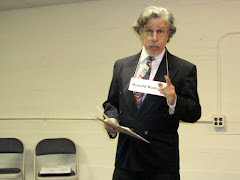
Dennis Mueller and Michael Fisher
 Next came two films about the consequences of war: Dennis Mueller’s documentary about Vietnam vets
, Soldiers of Peace, and Michael Fisher’s homecoming drama, Stations. This led to a spirited discussion, followed by a segment from Alison Segar’s We Have to Talk about Hunger and Benjamin Stimson Glean, Freeze, Give, both about food issues in Vermont.
     The morning ended with two works about the power and complexity of the human mind: a segment from Darwin’s Extra Sense by Wendy Conquest, Bob Drake and Dan Rockmore; and Out of the Den, a look at the life of bears and a man who has spent more than a decade with them, produced by a Dartmouth documentary class.

Post-Modern Challenges in the Transmedia Age

Despite the considerable promise of new transmedia forms there are some pitfalls, including the nature of the dominant media environment.
     In the so-called “modern era,” things basically made sense. Despite any setbacks, technical dangers or mad dictators most people believed in the possibility of a better future, changing the world that was changing us. But now we live in a “post-modern” world, and although it’s not a totally negative place, it does emphasize uncertainty, spectacle, and even the chaotic.
     Self-conscious and often self-contradictory, post-modernists tend to believe that truth is merely a perspective and nothing should be taken that seriously. The characteristic expression is irony, emphasizing the doubleness in whatever is being expressed. A favorite grammatical device is quotation marks, reinforcing the idea that the words don’t mean what they seem. This expresses the defensive cultural logic of late-capitalism, and can play well into the schemes of media and political demagogues.
      Faced with machines that have made life more complex, a vast amount of information – much of it unsettling, and an overwhelming variety of “choices,” it’s hardly surprising that people, especially the young, aren’t impressed with much of anything. Their favorite books often revel in this sensibility and abandon the grand narrative approach once standard in novels. Although most movies still rely on the old linear formula – the hero confronting obstacles to reach an obvious goal – few people really believe in that. Real life is so much more ambiguous and complex.
      The central institutions of post-modern civilization are, of course, the electronic media. Most advertising suggests that appearances are what matter, while the shows wedged between them reinforce ironic distance, often winking at us that it’s all a put-on. And the news? Plenty of facts. But enduring truth? That’s the last thing we expect anymore.
      Meanwhile, despite all its benefits, the “blogosphere” also accelerates social fragmentation. Many blogs and Websites attract only like-minded people, creating a self-segregated news and information environment that serves the interests of extremists. Truth and facts are becoming debatable notions. This makes it more difficult for people to reach agreement or even have a civil discussion, and easier for opportunists to ignore or distort reality for the sake of pushing initiatives based on convenience or special interests.
     That said, the news is not all bad. In fact, along with skepticism comes a re-awakened concern about the human spiritual condition and the planet’s health. It has also become easier to create or manipulate photos, video and music; in effect, to become an independent content producer.
     According to Henry Jenkins, one of the earliest academic thinkers to notice the potential of transmedia, new tools allow people to “write over” the dominant media culture, to remix, remold, amend and extend it – and then re-circulate a new creation, possibly even crossing back into the “mainstream” media.
     Since this type of storytelling requires coordination across media, Jenkins believes that it works best either for independent projects where one artist shapes the story across all the media involved, or those where strong collaboration is encouraged across divisions of the same company.
     One clear hallmark of transmedia is a marriage of narrative and new technology. “Passive viewing and active viewing are changing,” explains Genna Terranova, director of programming for the Tribeca film festival in New York. “You see it in our own cultural habits, where you watch TV and have a second screen on Twitter or are interacting on Facebook. Now you’re starting to see independent projects harnessing all these tools and creating stories that live on multiple platforms.”
   At this year's film festival in White River, the promise of this new media era was on full and vivid display.