Showing posts with label Drugs. Show all posts

Wednesday, July 3, 2013

Restless Times, Big Love and Nagging Questions

This is the fourteenth chapter of a series excerpted from “Maverick Chronicles,” a memoir-in-progress. Previous stories can be found at VTDigger. By Greg Guma

Visiting Nicaragua as part of a peace delegation in 1983 was an inspiring experience. But I also noticed that the Sandinista road had some potholes. In bookstores, for instance, I saw only Marxist literature and imports from the Soviet Union. The country’s literacy crusade had made a huge difference, but right-wing propaganda was being replaced by ham-handed left-wing indoctrination.
     
Paulo Freire teaches
As a student of Paolo Freire, the Brazilian educator whose approach stressed the development of critical consciousness, I concluded that Nicaragua’s revolutionaries were passing up a chance to transform society. "We are unfinished beings in an unfinished reality,” Freire had explained in class. “We become educated every day. But education doesn't have to do with the quantity of information you eat. You are educated to the extent that you are engaged in creating knowledge."
     But how is knowledge created? I had asked.
     “Knowledge is a mixture of thought and action which becomes like a ball in permanent motion,” he said. “It moves in spirals until the 'teachment' comes forth and knowledge appears."
     The process sounded a bit like giving birth, a painful but liberating experience. Knowing demands reflection, action, curiosity, patience, hope to create and taking risks, Freire explained. But in most schools, the acts of knowing and creating new knowledge are divided, so places of education have essentially become shopping centers that sell existing knowledge.
     "In Latin America fatalism is expressed in reliance on God,” he said. “In North America it is the power of the establishment and technology that replaces God. It is as though history is already finished and not being created and growing."
     When I shared my impressions of Nicaragua during a speaking tour, some people in audiences nevertheless objected to my questions about the Sandinistas’ decision to suppress dissent or censor books and newspapers. They have no choice, folks said, pointing to US attempts to overthrown the new regime. They were right. The Reagan administration was funding a violent insurgency and other forms of destabilization. But the Sandinistas weren’t perfect, and support for them need not exclude a bit of constructive criticism.
      Self-criticism was supposedly an aspect of the Left’s approach to process. When it came to “our side,” however, any break from “unity” could be grounds for a charge of disloyalty, perhaps even “collaboration” with the enemy.
     Frustrated with such reactions, I stopped speaking about politics in public for a while and returned to the book business to launch Maverick Bookstore and Gallery in Burlington’s Old North End. The name felt appropriate, philosophically and because the Lloyds, my son’s family on Robin’s side, were related to the Maverick clan in Texas.
     Samuel Maverick was a big Texas personality and the origin of the word’s modern usage. The official story is that he won a ranch in a card game and afterward declined to brand his steers. Unbranded steers became known around San Antonio as mavericks.
     The TV show Maverick was pure fiction, but there was a large maverick family. Robin’s grandfather married Lola Maverick. He became famous briefly as a so-called “Communist millionaire;” she helped organize the Ford Peace Ship before World War I and co-founded the Women’s International League for Peace and Freedom. Some of their children were activists as well, including Robin’s dad Bill. So, when I thought about an independent enterprise, not to mention my journalism and peace work, the name felt apt.
     Running a local business replaced political arguments with community service, brought in a modest income, and provided the opportunity to create an outlet for new community projects. But I was still restless, and spent considerable time over the next several years in Europe, seeing as much of the world as I could afford.
     At the end of the 1980s I tried to reconnect with Vermont as coordinator of the Burlington Peace and Justice Center and commissioner on the local Library Board. I even made a second run for the City Council, again getting 42 percent of the vote. In that race the local GOP Chair called me a “serious professional revolutionary anarchist,” an attack I turned into a campaign button. But despite some modest successes – forging a connection between the peace and environmental movements, publishing a book about Vermont, bringing the local library under direct city control – I felt disconnected, out of synch with the increasingly gentrified Burlington scene.
     
One of our Mexican campsites
Fortunately, I was deeply in love at the time. If we are lucky, at some point we experience a great love, one that stirs the soul and rocks the world. Mine was a Danish guitarist who visited Burlington with an international work camp when I was in my mid-30s and she was 20. For the next six years we pursued a trans-continental affair, wintering in my camper on the Mexican coast, mushroom hunting on a remote Danish island, trying to live together in Denmark and Vermont, breaking up and re-uniting and breaking up again. Finally, in 1990, we gave up struggling and married. A year later we picked up stakes and moved to southern California.
     Before arriving we were both offered jobs, she as a music therapist at a state hospital, me as manager of a bookstore in Santa Monica. Gail Stevenson, a successful therapist with celebrity clients and a Frazier Crane-like husband who offered advice on the radio, was about to open a trendy “eco-feminist” bookstore across from the Santa Monica Museum. She’d heard about my Vermont business and hoped to create something similar, a bookstore that was also a center for community activity. She already had a name – Revolution.
     The location was prime, the patrons affluent, sometimes famous, the space large and airy. But Gail was more concerned about what it looked like than how well it functioned as a business. The interior was designed by an architect partial to deconstructionist style, so books were piled on rough crates and lodged on stark metal shelves that made effective display difficult. Six months after the opening, an event heralded by a front page piece in the style section of the Los Angeles Times, the renovations still weren’t complete.
     No matter how much money we made it wasn’t enough. The main reason was Gail’s inability to stop spending on anything but books. The kid’s section had to be a posh playground with toys and designer pillows, the coffee bar had to feature only the best espresso machine and pastries. There were always more ads to place for events, and new ideas for an even better image. Meanwhile, I struggled to make payroll for a large seven-days-a-week staff and keep up with monster bills from our wholesalers.
     When I mentioned the problems to Gail, pleading with her to get a grip on the spending, her gaze would drift away, as if distracted by an invisible marvel somewhere in the distance. When I finished talking she’d turn back and say something like, “We need better biscottis.” It was maddening.
     Eventually, I demanded some changes. Making a comprehensive list of what was essential to get the operation into the black, I presented my case. The next day she introduced my replacement.
     Two weeks later I was unemployed. Three weeks after that I received a call from a member of the bookstore staff. On Gail’s 46th birthday, the staffer recounted, she had purchased a gun, learned how to use it at a shooting range, then driven to her Westwood office and killed herself. She was beautiful, blonde and wealthy, with a young son, an admired spouse and A-list friends. None of it turned out to enough.
    I stayed in L.A. for another year, but after the Revolution disaster I just couldn’t connect with the city’s ephemeral, often narcissistic culture. Three of my screenplays made the rounds – an historical epic on the Haymarket bombing, a film noir take on the CIA’s notorious MK-Ultra mind control program and a contemporary thriller about religious fundamentalists who carry out assassinations for a covert right wing group – but none of them survived the Hollywood meat grinder. After a few years neither did my marriage, although my love never faded and the memories remain.  
     Back in Vermont, the editorship of Toward Freedom opened up at the right moment, so I returned East and tried to recover. Still, the restlessness would not go away.
     In 1995, when an ex-girlfriend got in touch and I learned that she was moving to New Mexico for health reasons, I decided to give the west another try. Fortunately, the Internet had gone public by then, so it was possible to edit Toward Freedom long distance, even increase its immediacy and writer network. Dave Dellinger, who was co-chairing the board with Robin Lloyd, was skeptical but willing to give the idea a chance.
     A few months after arriving I was both editing TF and running yet another progressive non-profit, the Albuquerque Border City Project, an immigrant rights organization that provided legal services. As it happened, the US was just entering one of its periodic bouts with anti-immigrant fever.
     While living in L.A., I had watched the Border Patrol play a key role in the riots of 1992, deployed in Latino communities and arresting more than 1,000 people. Afterward, the INS had begun work with the Pentagon’s Center for Low-Intensity Conflict. The line between civilian and military operations was largely being erased. Human Rights Watch accused the US Border Patrol of routinely abusing people, citing a pattern of beatings, shootings, rapes, and deaths. In response, INS detainees in a private jail rioted in June 1995 after being tortured by guards.
     In many ways Los Angeles embodied the American Dream. The confluence of climate, capital and demographics had made California one of the world’s largest economies, an “international” state that was also the image capital of the world. But it was also rapidly becoming a "third world" state. As David Rieff noted in Los Angeles: Capital of the Third World, the rest of the country – and perhaps the world – might well follow the L.A. model. Rieff considered it, at the very least, a national archetype. The US was no longer an extension of Europe, he argued, becoming instead "an increasingly nonwhite country adrift, however majestically and powerfully, in an increasingly nonwhite world."
     While I worked in Albuquerque, the border became a battlefield, and government strategies for combating undocumented immigration re-militarized the region. The recently-passed North American Free Trade Agreement (NAFTA) meshed neatly with more obvious aspects of low-intensity conflict (LIC) doctrine. The definition of immigration and drug trafficking as “national security” issues brought state-of-the-art military approaches into domestic affairs. Just as the projection of a “communist menace” was a smokescreen for post-war expansionism, a “Brown wave,” the “Drug War” and terrorism were being used as pretexts for military-industrial penetration.
     In New Mexico I immersed myself in immigration law and regional race politics, developing a coalition of sympathetic groups to fight back against the most draconian aspects of a new immigration reform law. We staged public rallies in Old Town, and brought Latino and Asian spokesmen to Santa Fe to testify at legislative hearings. Sensing potential, the progressive power structure welcomed such initiatives and offered me a spot on the State Human Rights Commission.
     I remained an outsider, however, one who didn’t fully understand the nature of the local culture or embrace some of its assumptions. The cause was just. But the small, progressive enclave I’d entered was isolated from a larger and essentially conservative community. Neither felt like a place where I could comfortably put down roots.
    What was I, an activist or a writer? A foot soldier in the long progressive march – a movement about which I was having some doubts – or a social critic and observer, always questioning conventional wisdom? Was it possible to be both? Wherever I went such questions followed.
     Maybe my standards were too rigid, or my expectations too high, I thought. Maybe a more practical, less perfectionist approach to life and work would serve me – and whatever came next – a bit better. After years of self-imposed exile it was time to go home and find out.

Maverick Chronicles will continue ...

Monday, July 1, 2013

Contras, Drugs and Money

The Hunt for the Secret Team
By Greg Guma

Death of a Whistleblower

Steven Carr joined the Reagan administration's "secret" war against Nicaragua because he "wanted to fight the Sandinistas." Too young to have served in Vietnam, he was hungry for adventure in an anti-communist crusade.
    As Carr later admitted, he and four other mercenaries met in Miami in March 1985. From there he drove a truck loaded with weapons to the Fort Lauderdale Airport. The weapons -- M-16 rifles, .50 caliber machine guns, and 66-mm mortars -- came from storage facilities belonging to various Cuban exile groups. Some may have been pilfered from National Guard armories.
     The recruits flew with the supplies to El Salvador, where, with official assistance, they transferred the shipment to another plane and went on to Costa Rica. There they found a Contra base coordinated from a ranch owned by John Hull, a US citizen who claimed to have CIA and National Security Council (NSC) connections. 
     Over the next month Carr participated in a raid on a small Nicaraguan town, as well as plans to bomb power lines. He heard about other schemes, including the assassination of enemies and staging attacks that could be blamed on the Sandinistas. These were supposed to provide a pretext for further US involvement, and ultimately an invasion.
     To Carr, it looked like a sanctioned US operation. Hull talked often about his "buddies" in the NSC. When Carr went on a raid, Costa Rican Civil Guard troops accompanied the attacking force, he claimed. He also learned about cocaine shipments flowing through Hull's ranch on their way to the US. For his various services, Hull claimed to be receiving regular $10,000 payments, which he ballooned by trading currency on the black market.
     It seemed like a soldier of fortune's dream come true.
     But in April 1985, the Costa Rican government apparently turned sour on the "expeditionary" force, arresting Carr and his associates (not including Hull) for violating neutrality laws. The once gung-ho 27-year old, bitter about "being made the scapegoat for everybody else," decided to talk. On videotape and later to US investigators, he spoke about moving weapons, assassination plots, and Contra assistance to drug smugglers. He recommended that others do the same.
     In a letter to Jesus Garcia, another witness with details about the Contra network's "dirty tricks," Carr wrote about his plans: "I've put all my marbles in their (the investigators') corner hoping to get to the truth of things and show how our 'wonderful' CIA are a bunch of assholes, liars, cheats and murderers.  I'm an American all the way but I stop at killing other Americans for the sake of CIA war games."
     After his release by the Costa Ricans, Carr came home and began to cooperate with officials in Florida and congressional investigators. He also became paranoid -- with good reason. The US administration wanted to discredit his testimony about the arms shipments and another plot, devised at the urging of Colombian drug lords. The traffickers had offered a $1 million reward to the Contra network in Costa Rica, he claimed, for the murder of Lewis Tambs, former ambassador to Colombia, who had been attempting to crack down on drug smuggling.
     The pressure on Carr was intense. One of his companions, Peter Glibbery, still jailed in Costa Rica, had received a death threat from an employee of John Hull.
     On December 17, 1986 Steven Carr was found dead near Los Angeles. Local authorities were quick to label it suicide. He apparently had stumbled to his car at 2:30 a.m., foaming at the mouth, and dropped dead in the driveway, probably from a cocaine overdose. Medical reports were inconclusive and a coroner's toxicity report failed to resolve the mystery.

The Contra-Cocaine Connection

During a televised speech on March 16, 1986, President Reagan displayed a photograph taken in Nicaragua and claimed that it proved top Nicaraguan officials were involved in cocaine trafficking. As it turned out, there was no real evidence and the Drug Enforcement Agency (DEA) later issued a low-key "clarification." But the smear was effective; it distracted attention from the ongoing investigation of Contra involvement in the drug trade.
     Barry Seal, the only person who might have told the true story about the grainy picture of men loading a plane near Managua, was already dead. A DEA informant and pilot, Seal had been murdered on February 19 in Baton Rouge, Louisiana, reportedly on orders from the Colombian cocaine magnate who had arranged the shipments in association with the Contra network. One of the suspects, in federal custody on an unrelated charge, was Jose Coutin, a suspected drug dealer and Miami gunshop owner with links to John Hull's ranch operations.
     Seal's story, and the Contra-cocaine connection, were subsequently the subject of several investigations. In a report by the International Center for Development Policy, directed by former US Ambassador to El Salvador Robert White, Seal emerged as a dangerous pawn who knew too much. For example, he knew that the Colombians were using Hull's ranch as a shipping point.
     He also knew that the famous incriminating photo had been taken on DEA orders, and that other US government figures were aware of the shipments. But when the White House leaked the story about the Sandinistas and drugs, along with the photo, Seal's cover was blown. He’d taken the picture himself. The Colombians, according to White's report, put a $2 million price on his head.
     Dan Sheehan of the Christic Institute, an interfaith law and policy center that independently dug into the private arms network fueling the Contras, concluded that the Seal shipments were merely a small part of the network's deal to transport cocaine in exchange for funds to purchase arms. In 1983, Sheehan revealed, several anti-Castro Cubans and Hull agreed to provide refueling and packaging services on the Costa Rican ranch in exchange for up to $25,000 per shipment from the Colombians.
     "As amazing as it sounds," Sheehan claimed later, "the conspiracy is continuing to bring in about one ton or 1000 kilos of cocaine to the US each week." The street value of such a shipment was more than $25 million. Some of the profits, he added, were deposited in Miami and Central American banks and later withdrawn to purchase weapons.
     The picture that emerged from these overlapping investigations was of an alliance stretching back years and providing smugglers with secure routes to the US in exchange for cash. According to Jesus Garcia, a former Dade County, Florida deputy sheriff who was part of the operation before he went to prison for illegal firearms possession, "It is common knowledge in Miami that this whole Contra operation in Costa Rica was paid for with cocaine. Everyone involved knows it. I actually saw the cocaine and weapons together under one roof, weapons that I helped ship to Costa Rica."
     The same charge was leveled in a civil complaint filed by journalists Tony Avirgan and Martha Honey. They alleged that the network was responsible for a bombing in Costa Rica in which Contra leader Eden Pastora and several journalists were injured. Avirgan was one of those wounded. Several others, including one US reporter, were killed.
     Honey and Avirgan claimed that, in order to fund their operations, a deal had been struck between Hull, some Cuban-Americans, and Contra leaders hostile to Pastora, who refused to merge with other Contra forces. Drugs flowed freely through Costa Rica to various US points; profits paid for weapons from Florida, Israel and South Korea, according to the White Report. When Pastora remained uncooperative, the same group contracted with a Libyan professional assassin, Amac Galil, to eliminate him.
     Citing White House sources, the New York Times reported on January 20, 1987 that the DEA had known since at least the previous fall that US flight crews carrying arms to the Contras were smuggling cocaine on return trips to the US. When told about the investigation one crew member reportedly warned that he was under the protection of Lt. Col. Oliver North.
     "The Contra operation," emphasized White's report, "like all covert operations, breeds criminality, attracts criminals, and results in the cover up of criminal activity. The most profitable criminal activity today is narcotics. It is not surprising to find Contra and Contra-related figures using the opportunities provided by the operation to enrich themselves in the name of a cause nor to find the US officials responsible for the operation either condoning their actions or not taking active measures to stop them."

Bush in the Loop

Various researchers and investigations have established that Vice President George Bush and his national security advisers maintained close ties with the secret air-re-supply operation in El Salvador. In October 1986, a week after the Nicaraguan government shot down a plane carrying supplies for the Contras, front page press reports announced that the operation led to both the CIA and Bush.
      Resupply project Chief Felix Rodriguez met several times with Bush and a key aide, but the VP claimed they did not discuss Nicaragua. The trail also led to the vice president’s son Jeb Bush, who had “long acted as a liaison man with the fiercely pro-Contra, anti-Cuban and Nicaraguan settlers in Miami,” according to the Manchester Guardian.
     Such stories soon vanished, however, and Bush, heir apparent to Reagan, was insulated from further probing questions for the next two years. Nevertheless, he was the one person who connected the CIA, NSA and the mercenary forces on the ground.
     In 1984, when Congress cut off Contra aid, the administration privatized the war. Oliver North designed the plan, NSA chief Robert McFarlane approved it, and the President was briefed. The arrangement was summed up in a Miami Herald report: “The NSC recruited technical and logistical personnel retired from the CIA or the Army Special Forces to establish the network, and Bush’s staff concentrated on organizing Cuban exiles in Miami, many of them veterans of the CIA-organized Bay of Pigs invasion in 1961.” Assistant Secretary of State Elliot Abrams became “general strategist,” with CIA Director Bill Casey and North handling operations.
     Elliott Abrams was deeply involved in Contra activities, coordinating between the Department of State, NSC and CIA. But this was only part of a larger inter-agency program masterminded by CIA Director Casey. The Defense Department planned airdrops over Nicaragua and provided troops to build the Contra infrastructure. A private aid network, including John Singlaub's World Anti-Communist League, various non-profit fronts, mercenary groups and CAUSA, the political wing of the Moonies, provided cover for an operation that ultimately led back to the Oval office.
     Rodriguez, both ex-CIA and a Bay of Pigs vet, coordinated the supply route from El Salvador after approaching an old CIA colleague, Donald Gregg, a Bush aide. With administration blessings, he established the Ilopango air base, which involved at least eight planes and hundreds of missions. But the cost was too high for the private organizations coordinated by Gen. John Singlaub, head of the World Anti-Communist League.
     In 1985, after Honduras decided to hold up Contra supplies, Rodriguez met with Bush. Soon after their talk the Contra flights through Ilopango increased, according to witnesses and press reports. It was illegal to supply weapons, yet Rodriguez was able to maintain a direct line with both the US embassy and Don Gregg at the White House. The money, it turns out, was coming from Washington via Israel, Iran and a Swiss bank.
     Money also came from Saudi Arabia as part of a kickback for the sale of AWACs. According to the New York Times, the point man for this was Richard Secord, a retired Air Force general and Pentagon official who eventually led what became known as the Secret Team.
    Secord used money from Iran arms sales and other sources to acquire weapons and channel them to Central America, South Africa, and Angola. The team and the aid network worked with both the Ilopango airlift in El Salvador and the South Front, coordinated from Hull's ranch. Drugs and guns moved back and forth. One beneficiary was the Nicaraguan Democratic Force, led by Adolfo Calero and former Somocistas.
     Over 80 people, in and out of the US government, actively worked in this covert network, with additional financial support from Saudi Arabia and Brunei. President Reagan was aware of and approved most phases of this covert foreign policy.

Private Agents of Chaos

This was only one episode in a longer, even more convoluted tale. An earlier "Contra" war was mounted against Cuba under the direction of Richard Nixon, then vice president, beginning in the late 50s.
     With the cooperation of Mafia don Santo Trafficante, a private "sub-operation" was developed to assassinate Cuban leaders. Members of the "shooter team" included Rafael "Chi Chi" Quintero, who later coordinated arms shipments to the Contras with Secord; Rodriguez, a CIA operative who headed the Ilopango operation and met with Bush; and several of the future Watergate burglers. The Cuban operation was supervised by Secord associates Theodore Shackley and Thomas Clines.
     Secord was a key figure in both the Iran and Contra operations. Years before he had flown missions with another Major General, Singlaub, and, as a Pentagon official, embezzled millions while overseeing arms sales. One of his business partners was Shackley, who had been engaged in secret wars since the early 60s, becoming deputy director of covert operations during George Bush's tenure as CIA chief. Clines, another ex-CIA man and a major Contra arms supplier, eventually pleaded guilty to overcharging the Pentagon in 1984.
     The same group had directed CIA secret wars in Southeast Asia between 1965 and 1975. In Laos they backed up Vang Pao, a major opium trafficker. Drug money was used to train Hmong tribesmen in guerrilla war, resulting in the assassination of 100,000 non-combatant "communist sympathizers" in Laos, Cambodia and Thailand. Shackley and Clines also directed the Phoenix Program in South Vietnam, an effort resulting in the murder of 60,000 Vietnamese civilians. That operation was financed by Vang Pao heroin sold in the US by Trafficante.
     During the early 1970s, they were active in Chile, directing the CIA's "Track II" project to overthrow the Allende government. In 1984, members of the Team recruited Amac Galil through the Chilean military to execute the bombing of Pastora's press conference.
     After Vietnam, the Team moved on to Teheran to conduct private, non-CIA activities like helping the Shah's secret police to identify and assassinate his opponents. Beginning in the mid-70s, Secord, who had become an Assistant Secretary of Defense, supervised the sale of US weapons to Middle East nations. Using middleman Albert Hakim, an Iranian-born US citizen, he purchased weapons at the manufacturer's cost and sold them to countries at a profit, illegally depositing the proceeds into private Team bank accounts. The same practice was used later during the arms sales to Iran.
     The Secret Team's activities stretched around the world. In Australia, they used opium money and weapons profits to help destabilize the Labour government in 1975. In Nicaragua, they assisted Somoza after Carter and Congress stopped further aid; after the dictator's fall, they armed and advised ex-National Guardsmen until the CIA assumed control of the Contra war.
     When Congress cut off aid in 1984, Oliver North, who had worked under Singlaub in Laos, reached out to the Team to illegally recommence funding and re-supply the Contras. During the 1980s operations in Central America, they established major supply bases in Honduras, El Salvador, Guatemala and Costa Rica. In the meantime, CIA Director Casey developed other Contra operations in Africa. In return for South African assistance in ferrying arms to Central America, for example, he arranged with Saudi Arabian King Fahd to provide aid to the South African-backed UNITA rebels fighting the Angolan government.

Exposing the Team

Before his death, Steven Carr told an aide to Senator John Kerry that he had loaded an arms shipment bound for Costa Rica in broad daylight at the Fort Lauderdale airport. The weapons went to an Air Force base in El Salvador, where military personnel unloaded the plane. In an interview taped after his arrest, he argued that without CIA knowledge "it's improbable that a private charter plane could land at an Air Force base. It's not like we were going on vacation."
     In a video report, "The Costa Rica Connection," Carr and his British associate, Peter Glibbery, alleged their covert work had the full support of Costa Rican officials at first. They said John Hull presented himself as the chief CIA and NSC liaison for the operations. Glibbery claimed to have seen Hull with Robert Owen on the ranch when arms were arriving. Owen, a retired military officer and representative of a Nicaraguan "humanitarian" aid group, was North's contact with the Contra network.
     Predictably, the State Department denied any knowledge of Contra involvement in cocaine deals, and the US Customs Service claimed to know nothing about arms shipments leaving Florida without official clearance. The evidence, however, indicated that the weapons and the drugs did get delivered, and the same network was involved in both operations.
     Avrigan and Honey exposed the private network behind much of this mayhem long before the Tower Commission and Iran-Contra Committee launched their investigations. Working with the Christic Institute, they eventually filed a lawsuit charging 29 US citizens with conspiracy. The specific instance spurring the suit was the bombing of Pastora's press conference. 
     The Secret Team, which helped make that attempted assassination possible, had roots stretching back decades. Including figures such as Secord, Clines, Shackley and an assortment of Cuban exiles and ex-military men, this private military network had long been handling sensitive, often illegal operations at the behest of the US government. In fact, it was an instrument of US policy from the early days of Castro (when some members helped plot the leader's death), in Laos and Vietnam, in the overthrow of Salvadore Allende in Chile, in propping up the Shah of Iran, and throughout Central America.
     After releasing their findings, the journalists were sued for libel in Costa Rica by Hull, the CIA contract agent named in the case. They won. But afterward they were the targets of a police raid, and one of their lawyers was arrested for accepting a package at the post office.
     Police claimed the package contained cocaine from a "T. Borge," a desperate attempt to perpetuate the stale disinformation campaign connecting Sandinista officials such as Tomas Borge with drug smuggling. In reality, the evidence says that the so-called Southern Front, run in the 1980s by John Hull, Oliver North, head Contra Adolfo Calero and Cuban exiles -- and sanctioned at the highest levels of the US government -- was for a while a major shipping point for Colombian cocaine headed to US cities.

Greg Guma's forthcoming novel Dons of Time, to be released by Fomite Press in October, explores the danger of privatized national security and the surveillance state.

Wednesday, June 26, 2013

Nicaragua and the Road to Contra-gate

This is the thirteenth chapter of a series excerpted from “Maverick Chronicles,” a memoir-in-progress. Previous stories can be found at VTDigger.  By Greg Guma

In July 1983, only weeks after being arrested with other anti-war protesters for nonviolently blocking the gates of the GE Gatling Gun plant in Burlington – ironically, on the orders of Progressive Mayor Bernie Sanders -- I joined the first Witness for Peace delegation to Nicaragua, spent weeks meeting with leaders of the Sandinista revolution, and became a human shield against Contra attacks at the border.
     At the time the CIA said that $19 million a year wasn't enough to pay and arm all the Contras eager to invade. President Reagan called the small country, crippled with debt, struggling to rebuild a looted economy, a totalitarian threat to US security.
     UN Ambassador Jeanne Kirkpatrick openly urged overthrow of the three-year-old regime.
     After a stop in Managua, the national capital, the plan was to move on to Jalapa. A week before several of us arrived two US journalists had been killed a few miles away. Nicaragua and Honduras blamed each other for the crime. On the day I flew out of Miami, the Contras, many of them former supporters of the late Nicaraguan dictator Anastasio Somoza, based in Honduras, announced plans for a major offensive against the Sandinista government.
     The rural region looked bucolic. Lush green forests and undulating hills reminded me of home. There wasn't a paved road for more than 50 miles. It was here, nevertheless, and on the Atlantic Coast and at the southern border with Costa Rica, that the CIA was conducting its latest "secret" war.
     Jalapa wasn’t much involved in the revolution that ousted Somoza in 1979. Now it was a battleground in a counter-revolutionary struggle being stage-managed by the US administration. Yet training, Honduran complicity and US millions to build a mercenary army hadn't yet translated into military victory. Instead, destruction of bridges, crops and lives hardened campesinos against their attackers. Even some of those peasant who hadn't helped to win the revolution were now arming themselves to defend it.

The audience in Jalapa
 As our bus lurched over a rutted, muddy road I thought about the previous day – July 4th, America's Independence Day. I’d spent it in barrios and church learning about reconstruction and democratization. Our group’s movements were being dutifully recorded in the local press. The pro-government newspaper, Nuevo Diario, exploited us like gringo celebrities, Americans who said "Si a Nicaragua y No a Reagan." It was surely odd being publicly embraced in a country my own government was intent on destabilizing.
     The day ended with an immersion in revolutionary faith, an evangelical service climaxing in an ecumenical mass at Santa Maria de los Angeles. Between remarks by Father Uriel Molina and others about Contra violence, the nuclear threat and God's protection of the poor an acoustic band played songs of love and peace. Children roamed through the domed church as the Americans and Nicaraguans rejoiced and reflected.
     At one point Molina read a letter from the Christian community in Jalapa. "The defense of one's life against unjust aggression has always been justified by Christian faith," the writer argued. Two weeks later President Reagan labeled that type of self-defense, in the form of local militias, the building of a "war machine" and sent warships to surround the country.
     "We don't believe that power lies in arms," Interior Minister Tomas Borge told celebrants at the mass. Unannounced and greeted with cheers, a military hero had joined us during the service.  The US Right considered Borge a "hardliner." His vigorous defense of an armed citizenry tended to support the theory. But he also talked about "moral force" and his hope that social transformation in a "new Nicaragua" would produce a "new man and woman."
     As people hugged and linked arms, the service turned into a celebration of solidarity. Doves were freed as people flocked to the altar for communion. This was liberation theology in vivid practice, a revolutionary synthesis of faith and principles that had become an engine for social change.
     As we poured out of the church at midnight, exhausted but inspired, I recalled the words of Ernesto Cardinal, a Catholic priest and Marxist poet. After resisting Somoza and developing a militant Catholic vision, he’d become Nicaragua's Minister of Culture. One of his poems, written during the most brutal phase of the dictatorship, concluded:
    At midnight a poor woman gave birth to a baby in an open field
                   and that is hope.
    God has said: "Behold I make all things new"
                   and that is reconstruction.

Front Page, El Nuevo Diaro, July 7, 1983 (Greg's the one in the cap.)
Main headline: "Viaje secreto de Jefe de la CIA"

Struggle at the Border

The caravan reached Jalapa after a day on the road, plus an unscheduled stop when one of the buses couldn't make it over a washed-out section. By this time the delegation had grown to 150 people from over 30 states. The goal was to confront violence with conscience.
     Once upon a time this was a quiet place, a town of about 10,000 people in a region that produced corn, rice, beans and about 75 percent of the tobacco grown in the country. Now Jalapa was swollen with refugees, driven into town from homes in the mountains by Contra attacks. Crop production was down and peasants lived in a constant state of anxiety, girded for an invasion. Still, as we made our way to the Instituto, our lodgings, people greeted us with smiles. The generosity of spirit was humbling.
     Originally built in 1980 as a center to train Brigadistas for the nationwide literacy crusade, the Instituto had no beds or running water. We were tired, hungry and dehydrated -- and shortly drenched by a rainstorm. But many people, even children, were dying in similar circumstances – despite government vaccination programs and other efforts to fight disease and malnutrition. No one complained.
     Would a vigil and public witness make any difference? Could it make clear that not all Americans supported US-backed terrorism? Maybe. On a more basic level, we’d also brought food and medical supplies. But what the people we met seemed to value most was our support and our presence.
     We were promised a military briefing.  Before that, however, we attended a rally. In heavy rain 500 peasants squeezed into Jalapa's town hall. As we entered the crowd parted and cheers erupted. On the stage, we lined up with local leaders as a theologian in the delegation told the audience that Reagan's plan for Central America did not represent the will of the American people.
     After the rally Captain Gonzalez, who commanded about 3,000 troops in Nuevo Segovia, outlined the mathematics of aggression: 400 murders and abductions by Contras in the last six months. The attacks were not a recent development, however. Ever since the 1979 revolution, the Contras had been intent on invading this remote region, about 300 miles from Managua. The fighting intensified after 1980 with CIA advice and funding, and training of Contras in US camps like Libertad outside Miami, owned by Cuban exiles.
     Small Contra bands frequently crossed the border from Honduran bases, under cover of Honduran helicopters and small planes. They abducted local leaders, ambushed travelers, burned buildings and farm equipment, and kidnapped youngsters to carry their cargo. Occasionally there were major operations, involving up to 600 men and mortar shelling.
     The short-term objective was to take Jalapa, Gonzalez explained. The methods included repeated attacks from at least nine locations along the jagged border, and the indiscriminate shelling of civilians. Sometimes the Nicaraguan army shelled Honduras in response.
     The US was allegedly backing the Contras so that they could "interdict" arms moving through Nicaragua to El Salvador. But this was a farming region, not an ideal weapons supply route; it faced rugged Honduran mountains over which arms shipments could reach only Contras. No, the battle for Jalapa was a case of aggression designed to make the region uninhabitable, turning farmland into a staging area for an invasion force. And even if that failed, the Contras could still provoke the Sandinistas into war with Honduras.

Action for Peace

At 7 a.m. the next day delegation of peasants joined us on the Instituto's concrete basketball court. With blankets as cushions, we had spent the last few hours resting on the tile floors. Some of the supplies we used were Russian imports.
     Campesinos and mothers of several local martyrs joined the vigil under a scorching sun. They shared stories and revealed their grief as US group unfurled banners and offered their own testimony. One Nicaraguan woman, tearful, dressed in black, painfully recalled how the Contras had taken her son. They had tried to "recruit" him for their army. But when he refused to work for men who were devastating his community they cut him into small pieces, she said. Not being able to see her son was, in a way, more painful than the realization that he was gone.
Border vigil, July 1983
     After the vigil we walked out of the Instituto into a cornfield. Sandinista soldiers guarded us from a hilltop barracks silhouetted against the sky. The border was just ahead, the route a line of trenches that divided the fields, slashes of red earth about four feet deep. The campesinos hid there when Huey helicopters from Honduras flew overhead. We linked hands as people planted corn with water from our two nations.
     There were many moments of forgiveness and mutual support that day, but the war obviously didn’t end. Yet our presence in Nicaragua did mean something, and certainly built a deeper commitment within members of the group to oppose this and other undeclared, illegal wars.
     Back in Managua we soon found an opportunity to confront US Ambassador Anthony Quainton. At an Embassy event, we asked for the justification of the covert US role in a Honduran-Nicaraguan war?
     "We are trying to get back to the original goals of the revolution" he said. The reply sounded arrogant. Asked about the pointless violence he tried to explain that "the killing of women and children is not the policy of our government," then attempted to define the situation as "Nicaraguans fighting Nicaraguans." Witness for Peace members became enraged as he defended the Contras, claiming that they wanted to "return to democratic political institutions."
     When someone said that war wouldn’t bring peace he had to agree.
     In a private conversation later, Quainton did acknowledge that Reagan's characterization of the Sandinistas as "totalitarian" wasn’t constructive. He also agreed that US actions such as aid cut-offs and import sanctions were pushing Nicaragua toward the Soviets, a situation policy-makers claimed they were trying to prevent.
     "But the problem of regional destabilization is at the head of the agenda," he said, "and that determines policies and makes other things less important."
     In other words, it made little difference that Nicaragua had a mixed economy, open elections at the local level, or a Council of State with representatives from various parties and social groups. The country's social and economic progress, agrarian reform and literacy crusade were simply cancelled out. Why? Perhaps because the existence of a "New Nicaragua" served as a good example that raised aspirations throughout the region. Now, that was "destabilizing" to US interests.
     Reagan put it more plainly. He wasn’t about to let "communists" get a foothold in Central America – even if they did hold elections. The administration therefore wanted people in the US to think that the Sandinista government was a brutal dictatorship increasing the misery of its people. After seeing Nicaragua, however, that was very hard to swallow.

Next: The Hunt for the Secret Team 

Friday, March 29, 2013

Paths to Independence: TF in Africa

The fifth installment of a series on Africa and Toward Freedom in the 1950s, plus this week's Rebel News highlights. 

In the next installment of Bill Lloyd’s reports from Africa in the late 1950s, he stepped aside for his daughter Robin to tell a story. She used the opportunity to write about an encounter in Southern Rhodesia with Ian Civil, one of her former teachers at the International School in Geneva.
     
Robin at a local protest
When they arrived Civil was holding an African baby in his arms. As Robin wrote, “Although the government professes partnership between the races, an apartheid almost as strong as their southern neighbors is the actual policy. It is unusual to see a white man and a black man talking on the streets in any manner other than a master-servant relationship. And it is unusual here to see a light man holding a dark baby.”
     Foul deeds were occurring, Robin reported. Hospitals were segregated, even the ambulances. They would actually carry away some victims and leave others behind. Civil had seen it himself: a European ambulance driving away when it saw the color of the victims’ skin. One person left behind later died. Civil said some Africans felt the situation was worse than South Africa.
     A week after they spoke he was declared a “prohibited immigrant” and deported. No reason was given.    
* * *
Next stop, Tanzania, then the UN Trust Territory of Tanganyika. While there Lloyd and company visited the African section of Dar as Salaan to call on Julius Nyerere, president of the Tanganyika African National Union (TANU). They talked about British attempts to ban the party before an upcoming vote.
     The next morning, having just seen the city’s poverty, they witnessed some pomp and glory out of the 19th century during a celebration of Remembrance Day, which was something like the US Veterans’ Day. Officialdom donned their white uniforms and gloves, attended church services, and laid wreaths on two war memorials. 
     “To one with Quaker tendencies the sight of church ushers wearing swords was a bit of a shock,” Bill wrote.
     For a few days Robin and the younger Bill split off from their father’s itinerary to visit the Friends African Mission in Kenya. Bill stayed for a week and later wrote a story for TF. 
     He had visited the Mission hospital and houses used for TB patients. Although African and European work campers were cordial, he noted that they didn’t socialize much, in part due to language barriers. Nevertheless, he considered it a rare opportunity for different races to work together, one that could lead to better understanding.
* * *
In The Sudan the Lloyds met with Prime Minister Addallah Khalil, who summed up the nation’s three years of independence this way: “We thought we could take independence, but have found that we must build it.”
     The meeting had been arranged by Education Minister Nasr Hag Ali, who was a friend of Leon Despres, a Chicago alderman and member of TF's board.. Ali said the spirit of independence was so pronounced among the country’s largely nomadic population that the government found it difficult to implement regulations.
     Bill asked whether reports of Communist influence were true. No, he replied. “The communists are a very small and unimportant group.” On the other hand, he also claimed that although an application had been made for US aid, no “strings” would be accepted.
* * *     
The family delegation’s last stop was Tunis. At the time President Bourguiba was helping to mediate between France and Algerian rebels across the border. The Tunisian government was also hosting about 300,000 refugees. The Lloyds met with Bourguiba in his private residence near the ancient site of Carthage.
     Bourguiba said the US was losing an opportunity by failing to recognize France’s mistakes in Algeria. He made a comparison with South Vietnam, where the US had backed President Diem over French objections, and predicted that a Saudi Arabian proposal for a provisional Algerian government on foreign soil wouldn’t satisfy the nationalists.  
     But he conceded that domination of the independence movement by the military was also a problem. “Already they are antagonistic toward intellectuals and civilians,” Bourguiba said, “and you just can’t tell what will happen if things go on as they are now. The longer the war lasts the greater the chance that anarchy will break out.”
    Ten weeks after arriving in Africa the Lloyds started home on December 7, 1957. “As we climbed into the clear sky, the beauty of the Gulf of Tunis turned our minds to the possibility of returning sometime as simple tourists with leisure to see the sights,” Lloyd wrote. “And then it was goodbye to a continent that can truly be said to be in crisis – a word which the Chinese very aptly consider a combination of danger and opportunity.”

On The Road Toward Freedom: A Cold War Story, part five of six.
On Monday: Deconstructions and Global Visions

REBEL NEWS, MARCH 29, 2013

Maverick Media’s Rebel News airs at 9 a.m. (more or less) on Fridays on WOMM (105.9-FM/LP – The Radiator and live streaming) in Burlington. Here are some highlights from this week’s round up.

EARTHQUAKE BLAMED ON FRACKING

Scientists have linked Oklahoma’s biggest recorded earthquake to the disposal of wastewater from oil production, more evidence of the need for greater regulation of hydraulic fracturing for oil and gas. The 5.7-magnitude quake in 2011 followed an 11-fold bump in seismic activity across the central US in recent years – just as disposal wells are created to handle increases in wastewater from hydraulic fracturing, or fracking.
     Researchers at the University of Oklahoma, Columbia University and the U.S. Geological Survey, who published their findings this week in the journal Geology, said the results point to the long-term risks the thousands of wells pose and shows a need for better monitoring and government oversight.
     The earthquake near Prague, Oklahoma, on Nov. 6, 2011, was the state’s biggest and may be the largest linked to the injection of water from drilling process, the researchers said. The state’s geological office disagreed, however, and argued it was likely “the result of natural causes.” The quake destroyed 14 homes, damaged other buildings, injured two people and buckled pavement, according to the report.
     The rise in earthquakes in the central US is “almost certainly” man-made, and may be connected with wastewater disposal, researchers claim. For the three decades until 2000, seismic events in the region averaged 21 a year. They jumped to 50 in 2009, 87 in 2010 and 134 in 2011.

KEYSTONE COMMENTS NOT SO PUBLIC

When the State Department hired a contractor to produce the latest environmental impact statement for the controversial Keystone XL pipeline, it asked for a Web-based electronic docket to record public comments. Thousands are expected from people and businesses eager to influence the outcome of the intense international debate over the project.
    But it won’t be easy to examine these documents. A summary of the comments will be included in the final version of the environmental impact statement, said a spokesman from the Office of Policy and Public Outreach in State's Bureau of Oceans, Environment and Science.  But the only way to see the comments themselves is by filing a request under the Freedom of Information Act (FOIA). The process could take so long that the debate could be over before the documents are available.

HALF OF RIVERS AND STREAMS POLLUTED

More than half of the nation’s thousands of miles of rivers and streams have poor water quality, including harmful nutrient pollution and mercury, according to the U.S. Environmental Protection Agency. That was the key finding of the agency’s first comprehensive examination of the health of U.S. waters.
     Fifty-five percent of these waters were considered to be in “poor” condition for aquatic life, while just 21 percent were considered “good.”  The results were based on samples collected randomly from nearly 2,000 rivers during the summers of 2008 and 2009, the agency said.
     Among the findings: More than a quarter of rivers and streams are particularly prone to flooding, pollution and erosion because of a dearth of vegetation cover… Nine percent of waters tested positive for high bacteria levels, making them not fit for swimming….and fish in more than 13,000 of miles of water carried high levels of mercury, a toxic element particularly harmful to children and fetuses.

"MISSING HEAT" FOUND IN DEEP OCEANS

Contrary to the popular contrarian myth, global warming has accelerated, with more overall global warming in the past 15 years than the prior 15 years. According to a study in Geophysical Research Letters, this is because about 90% of overall global warming goes into heating the oceans, and the oceans have been warming dramatically. As suspected, much of the so-called "missing heat"  has been found in the deep oceans. At least 30% of the ocean warming over the past decade has occurred in the deeper oceans below 700 meters, unprecedented over at least the past half century.
    Based on slowed global surface warming over the past decade, some research suggests that the sensitivity of the climate to the greenhouse effect is lower than the best estimate. But those studies don’t account for the warming of the deep oceans. Slowed surface air warming over the past decade may have lulled people into a false and unwarranted sense of security.

LESS WORK WOULD REDUCE CLIMATE IMPACTS

The choice between fewer work hours and increased consumption has significant implications for the rate of climate change. Studies say that shorter work hours are associated with lower greenhouse gas emissions and therefore less global climate change.
    Reducing work hours over the rest of the century by an annual average of 0.5 percent would eliminate about one-quarter to half of the global warming that is not already locked in (meaning the climate change that would be caused by 1990 levels of greenhouse gas concentrations already in the atmosphere).

INCOME: 90% EARNING JUST $59 MORE THAN IN '66

Still more statistics illuminate the spike in income inequality in the U.S. over recent decades. The vast majority averaged a mere $59 more in 2011 than in 1966. For the top 10 percent, by the same measures, average income rose by $116,071 to $254,864, an increase of 84 percent over 1966.

VERMONT: SUPREMES DENY REQUEST TO CLOSE NUKE

The Vermont Supreme Court has denied a petition to shut down the Vermont Yankee nuclear power plant. New England Coalition, an anti-nuclear group, contended that Entergy Corp., the plant's owner, had violated the sales order authorizing Entergy to buy the plant in 2002.
    At issue was a clause concerning a 2012 deadline for a new state permit. The Vermont Public Service Board said Entergy is in violation of the 2002 agreement and is taking more testimony before making a final decision. In the meantime, however, the plant can continue to operate.
    The Brattleboro Reformer reported that in its decision on Monday the high court ruled that the anti-nuclear coalition hasn't requested, nor has the board issued, an order directing Entergy to stop operating the plant on the grounds advanced by the group.
    Bottom Line:Thought the anti-nuke petition was dismissed, the Court invited opponents to pursue more options and pointed to another pending case.  Talk about mixed messages.

DRUG NEWS

BLOOMBERG'S POT BILL: $75 MILLION A YEAR

A new report documents that NYPD used approximately 1,000,000 hours of police officer time to make 440,000 marijuana possession arrests over 11 years.  The report also estimates that the people arrested for marijuana possession have spent five million hours in police custody over the last decade.
    Numerous other reports have exposed the array of problems associated with marijuana arrests in the city. New York has made more marijuana possession arrests under Mayor Michael Bloomberg than under mayors Koch, Dinkins and Giuliani combined. Nearly 70% of those arrested for marijuana are younger than 30 years old, and over 50% are under 21. They end up with a permanent criminal arrest record that can be accessed on the internet by employers, banks, schools, landlords, and others.
     Even though young whites use marijuana at higher rates, over 85% of the people arrested and jailed for marijuana possession are black and Latino. All these arrests are costing New Yorkers more than $75 million per year.
     Mayor Bloomberg recently announced administrative changes to how NYPD will process marijuana arrests. But there won't be a change in the law itself.  Advocates want Albany to act. 

PRESIDENTS ON DRUGS?

Kentucky Senator Rand Paul recently told Fox News that President Obama and former President George W. Bush could have "conceivably been put in jail" for using drugs. "Look, the last two presidents could have conceivably been put in jail for their drug use and I really think - look what would've happened, it would've ruined their lives,” Paul said. “They got lucky. But a lot of poor kids, particularly in the inner city, don't get lucky and they don't have good attorneys and they go to jail for some of these things and I think it's a big mistake."
     The statement prompted host Chris Wallace to note, "Actually, I think it would be the last three presidents, but who's counting?"

Friday, April 13, 2012

Burlington: Crime, Treatment and "Impairment"

Burglaries and violent crime are on the rise in Vermont's Queen City, and the primary reason is substance abuse. That's what Burlington Police Chief Michael Schirling told a Neighborhood Planning Assembly.
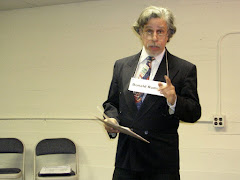
      During a lively panel discussion on April 12 Chittenden County State’s Attorney T.J. Donovan argued for a balance between accountability and treatment, and outreach team leader Matt Young warned about "serious functional impairment," which involves poverty, culture, entitlements, and mental health issues. Take a look...


“The numbers of the last three years for burglaries citywide look like this,” Burlington Police Chief Schirling reported early in the forum, “247 reported in 2009, 294 reported in 2010, and 380 reported in 2011. So, a substantial increase.”
     Two things are “in play,” he explained. “The first is intractable opiate and substance abuse addiction. Sort of secondary, but quite a bit further behind that, are folks that are I guess for lack of a better word, career criminals.”
     During a question period residents expressed support for police and corrections officials. But some also complained about noise and other “quality of life” offenses, and one resident said some of his friends and colleagues are “talking about leaving because it is at a tipping point.”
@ 
The discussion, held during a regular NPA meeting at Edmunds School near downtown, included Chittenden County State’s Attorney T.J. Donovan, University of Vermont Dean of Students David Nestor, Champlain College Director of Residential Life Ashley Mikell, Community Corrections District Manager Debbie Thibault, Rain Banbury of Burlington Parellel Justice, and Matt Young, who heads the Howard Center’s street outreach team.
     Donovan agreed with Schirling’s general assessment and said substance abuse is becoming an epidemic in Vermont. “It’s not just a Burlington issue.”
     The prosecutor pointed to a recent comment by Public Safety Commissioner Keith Flynn that more people are dying in Vermont due to opiate overdoses than from highway fatalities. “And we’re a rural state,” Donovan added. “Our jails are full in Vermont. We have a corrections budget of $140 million and a recidivism rate, depending on who you ask, of over 50 percent.”
     Thibault reported that the number of people under Corrections Department supervision has actually decreased by 14 percent since last year. That is because treatment courts and rapid arraignment have been effective, she said.
     Probation officers, who work in specialized areas, currently have about 30 people on their caseloads.  “With a smaller caseload we can focus on more serious offenders,” Thibault added. She said that should allow more direct supervision, seeing people more often, and more work by community corrections officers.   
     In 2009 the violent crime rate in Burlington was 29 percent lower than the national rate average, according to FBI figures. But the property crime rate was almost 50 percent higher.
     Donovan said the solution is balance. “People who commit crimes must be held accountable,” he argued, “but we also have to look at the back end of putting people in jail” since they will eventually get out.
     “It’s in our collective interest to plan for that release,” he said.
     One obstacle is that Vermont’s treatment facilities have long waiting lists. “And it’s no secret what people are going to do when they’re not getting treatment. They’re going to burglarize, they’re going to rob,” Donovan said.
@ 
Young noted that even though treatment is available for most of those who want it, many people who feel disadvantaged “are disabling themselves when they are unable to find employment. They see other people getting disability and they believe a lack on employment opportunities means they are disabled.” The resulting frustrating leads to “acting out,” he said.
     Young said that the state defines this as “serious functional impairment,” while the Police Department and courts are seeing “severe and persistent functional impairment. This is very difficult to address. There is poverty involved, culture, entitlements, and mental health issues.”
@     
Nestor acknowledged that although UVM students are sometimes the victims of crimes, “they may well be perpetrators of crime.” He added the university works with the police and service providers to hold students accountable for crimes committed off campus and get them into restitution programs.
     The list of common “nuisance” or “quality of life” offenses involving students includes noise, open containers and underage parties. Nestor estimates that UVM students are involved in about 250 off campus “infractions” a year. Drugs and alcohol are often involved.
     During the recent mayoral race Bram Kranichfeld, a city council member who sought the Democratic nomination, criticized UVM’s response to noise, vandalism and drug dealing with a memorable line. “Right now they have a more serious internal response to overdue library books than noise complaints,” he charged.
     Ward 6 NPA Co-facilitator Neil Groberg repeated the line as part of a question about whether local schools can do more to make students accountable.
     In response Nestor mentioned the question about whether the school could keep students from graduating if they get into trouble off campus. “We’re asked our legal counsel to look very closely at that,” he said, “and quite frankly, the words comes back that we really can’t begin to make that kind of nexus. We are certainly doing things to hold students accountable.”
     If students don’t pay parking tickets, for example, Nestor said the university checks ticket lists against campus registrations and contacts the students. “We talk about the expectation that the institution has for them to be good citizens,” he said. “We’ve been able to get some good results.”